Shoulder Labrum Reconstruction
Colorado Springs Orthopaedic Group
Your shoulder is one of the body's most mobile joints, allowing you to reach, lift, rotate, and perform countless everyday movements. Because of this mobility, the shoulder can also be susceptible to injuries, overuse, arthritis, and other conditions that cause pain and limit movement.
CSOG provides comprehensive evaluation and treatment for a wide range of shoulder conditions, from sports injuries and tendon problems to arthritis, instability, and fractures. Depending on your condition, treatment may include physical therapy, activity modification, medications, injections, minimally invasive procedures, or surgery.
Our shoulder specialists take the time to understand your symptoms, activity level, and goals so you can receive treatment designed to reduce pain, improve function, and help you get back to the activities that are important to you.
Shoulder Labrum Reconstruction Surgeon in Colorado Springs, CO
Traumatic injury to the shoulder, overuse of the shoulder associated with excessive throwing or weightlifting can cause a labral tear. It may also result from a weakened labrum due to aging. CSOG provides diagnosis and individualized nonoperative and operative treatments for the shoulder including shoulder labrum reconstruction in Colorado Springs, CO. CSOG also provides the highest level of care during and after surgery. Contact CSOG’s office for an appointment today!
What is Anatomy of the Shoulder Labrum?
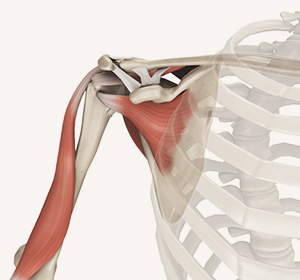
The shoulder joint is a ball and socket joint. A ball at the top of the upper arm bone (the humerus) fits neatly into a socket, called the glenoid, which is part of the shoulder blade (scapula). The labrum is a ring of fibrous cartilage surrounding the glenoid, which helps in stabilizing the shoulder joint. The biceps tendon is attached inside the shoulder joint at the superior labrum of the joint. The biceps tendon is a long cord-like structure that attaches the biceps muscle to the shoulder and helps to stabilize the joint.
What are Shoulder Labral Tears?
Traumatic injury to the shoulder or overuse of the shoulder by excessive throwing or weightlifting can cause a labral tear. In addition, the aging process may weaken the labrum, leading to injury secondary to wear and tear.
What are the Symptoms of Shoulder Labral Tears?
A shoulder labral tear injury can cause symptoms such as pain, a catching or locking sensation, decreased range of motion and joint instability.
What are the Types of Shoulder Labral Tears?
The most common types of labral tears include:
SLAP tear: The term SLAP (superior–labrum anterior-posterior) refers to an injury of the superior labrum of the shoulder at the attachment of the biceps tendon.
Bankart tear: A Bankart tear is an injury to the labrum that leads to recurrent dislocations and arthritis of the shoulder.
Posterior labrum tear: This type of labrum tear is rare, but may be caused by repeated internal impingement, where the extreme extension and external rotation of the shoulder joint cause pinching of the bulged part of the arm bone against the lining of the shoulder joint cavity.
How are Shoulder Labral Tears Diagnosed?
Your doctor may suspect a labral tear based on your symptoms and medical history. Several physical tests will be performed to evaluate the range of motion and stability of your shoulder. X-rays, computed tomography (CT) scan or magnetic resonance imaging (MRI) scan, with a contrast medium, may be ordered to determine the presence of tears. Diagnosis of a labral tear can also be confirmed through shoulder arthroscopy.
How are Shoulder Labral Tears Treated?
Conservative Treatment of Shoulder Labral Tears
Your doctor may initially suggest conservative approaches such as anti-inflammatory medications and advise rest to relieve symptoms. Rehabilitation exercises may be recommended to strengthen the rotator cuff muscles. If the symptoms do not resolve with these conservative measures, your doctor may recommend arthroscopic surgery.
Surgical Treatment of Shoulder Labral Tears
During arthroscopic surgery for SLAP tears, your surgeon examines the labrum and the biceps tendon. If the damage is confined to the labrum without involving the tendon, then the torn flap of the labrum will be removed. In cases where the tendon is also involved or if there is the detachment of the tendon, absorbable wires or sutures will be used to repair and reattach the tendon.
Bankart lesion is repaired by a Bankart operation. In this procedure, the Bankart tear is repaired by reattaching the labrum and the capsule to the anterior margin of the glenoid cavity. Your surgeon makes a few small incisions around the joint. Through one incision, an arthroscope is inserted into the shoulder to visualize the inside of the shoulder joint. Other surgical instruments are inserted through the other incisions to re-attach the labrum to the glenoid with the help of sutures or anchoring devices. The arthroscope and surgical instruments are removed, and the incisions are closed.
What Does Postoperative Care for Shoulder Labrum Reconstruction Involve?
Following the surgery, your shoulder is immobilized with a sling for a few days. To control pain and swelling, your physical therapist may use ice, electrical stimulation, massage therapy, and other hands-on treatments. Passive range of motion exercises is also initiated in the postoperative phase. Active range of motion exercises is started about 6 weeks after the repair to regain your shoulder movement. Athletes can return to sports in about three months.
What are the Risks and Complications of Shoulder Labrum Reconstruction?
The risks associated with a labral reconstruction include:
- Nerve injury
- Wound infection
- Tear of the repair
- Shoulder stiffness
- Recurrence of instability
- Poor positioning of the anchor suture
- Failure of the repair
If you would like additional information on shoulder treatments or to learn more about shoulder labrum reconstruction, please contact CSOG, serving the communities of Colorado Springs, CO.
For more information about our services or to schedule an appointment, call us at or click here to request an appointment online. We'll respond to you as soon as possible.
-
Send a Referral
-
Send Medical Records
-
Additional InquiresEmail us at [email protected]