Latissimus Dorsi Tendon Transfer for Rotator Cuff Repair
Colorado Springs Orthopaedic Group
Your shoulder is one of the body's most mobile joints, allowing you to reach, lift, rotate, and perform countless everyday movements. Because of this mobility, the shoulder can also be susceptible to injuries, overuse, arthritis, and other conditions that cause pain and limit movement.
CSOG provides comprehensive evaluation and treatment for a wide range of shoulder conditions, from sports injuries and tendon problems to arthritis, instability, and fractures. Depending on your condition, treatment may include physical therapy, activity modification, medications, injections, minimally invasive procedures, or surgery.
Our shoulder specialists take the time to understand your symptoms, activity level, and goals so you can receive treatment designed to reduce pain, improve function, and help you get back to the activities that are important to you.
What is Latissimus Dorsi Tendon Transfer (LDTT)?
Latissimus dorsi tendon transfer is a surgical procedure performed to reconstruct the irreparable rotator cuff tears in your shoulder. The procedure typically involves detaching the latissimus dorsi tendon from its original location and transferring it to the shoulder to repair the rotator cuff.
Irreparable rotator cuff tears are a challenging problem for patients and surgeons alike. LDTT can be an effective option for patients with massive posterosuperior rotator cuff tears and is increasingly being used in cases where the subscapularis tendon is unharmed.
The latissimus dorsi muscle is well suited to transfer for several reasons including its large surface area, strength, and good vascularization (formation of blood vessels).
What is the Anatomy of the Rotator Cuff?
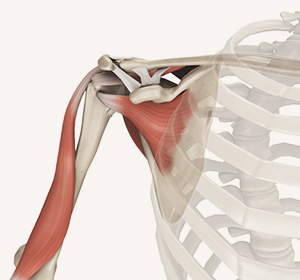
A rotator cuff is a group of four muscles and tendons that hold the shoulder joint in place and let you move shoulder and arm. The subscapularis muscle is one of the four muscles that make up the rotator cuff and is the largest, most powerful of all the muscles.
The latissimus dorsi tendon, also called the “lat,” is a large, wide, flat muscle spanning the width of your back, behind the arms. It connects the upper arm bone to the spine and the hip, stabilizes your back and helps control the movement of your shoulders.
Latissimus dorsi tendon is the most commonly transferred tendon to the shoulder area.
What are the Indications for LDTT?
- Severe pain in the shoulder joint combined with a popping sensation
- Immediate weakness in the upper arm and reduced mobility of the arm
- Muscle atrophy (wasting or loss of muscle tissue in the shoulder joint)
- Irreversible rotator cuff tears with the subscapularis tendon intact
- Joint replacement surgery (to improve external rotation and elevation mobility)
What is the Procedure for LDTT?
The procedure is performed as an open surgery or with arthroscopic assistance under general anesthesia.
During the LDTT:
- You will be positioned on your side.
- Your arm will be placed in a flexed position using an arm holder.
- Two incisions are made - one in the front and one in the back of your shoulder.
- The latissimus dorsi tendon is accessed and mobilized via the back incision.
- In the back, one end of the latissimus dorsi tendon is detached from the bone.
- With the help of a needle, a suture is passed across the freed end of the tendon.
- In the front, a flap is created in the deltoid muscle that covers the shoulder joint.
- Using a grasping tool, the freed end of the tendon is brought under the deltoid muscle.
- The transferred tendon is then connected to the remaining rotator cuff with sutures.
- The sutures are tightened to pull the latissimus dorsi tendon against the shoulder bone.
- The tendon and the sutures are further secured to the bone with strong suture anchors.
- The flap in the deltoid muscle and the incisions are then closed in the front and back.
What Does Aftercare and Rehabilitation Involve?
After the surgery, you will wear a sling or brace for 4 to 6 weeks to help keep your arm and shoulder immobilized. However, limited internal rotation and adduction (lowering the arm to one’s side) may be allowed.
Additionally, a three-phase rehabilitation program including specific shoulder exercises may be recommended for a successful outcome.
What are the Benefits of LDTT?
The procedure is a popular option, as it ensures the following:
- Reduced pain and weakness in the shoulder
- Improved mobility and function of the shoulder
- Long term results with fewer incidences of a revision procedure
What are the Complications of LDTT?
As with any surgery, LDTT comes with a few complications such as:
- Failure of the tendon transfer
- Rupture of the transferred attachment
- Shoulder weakness, stiffness or infection
- Decreased active forward elevation
- Need for revision procedures
What are the Contraindications for LDTT?
LDTT cannot be an option in cases of:
- Progressive chondropathy
- Clinically overt osteoarthritis
- Concomitant irreparable subscapularis tear
For more information about our services or to schedule an appointment, call us at or click here to request an appointment online. We'll respond to you as soon as possible.
-
Send a Referral
-
Send Medical Records
-
Additional InquiresEmail us at [email protected]