Ganglion Cyst
Colorado Springs Orthopaedic Group
Your hands and wrists play an important role in nearly everything you do, from working and exercising to performing everyday activities. Injuries, arthritis, nerve conditions, tendon problems, and other disorders can cause pain, weakness, stiffness, or loss of function.
CSOG provides comprehensive care for conditions affecting the hand, wrist, fingers, and surrounding structures. Our specialists offer a range of nonsurgical and surgical treatments, including therapy, injections, minimally invasive procedures, and advanced surgical techniques when appropriate.
Whether you are dealing with a new injury or a condition that has gradually affected your function, our team will evaluate your individual needs and develop a treatment plan focused on relieving symptoms, restoring function, and helping you return to the activities you enjoy.
What are Ganglion Cysts
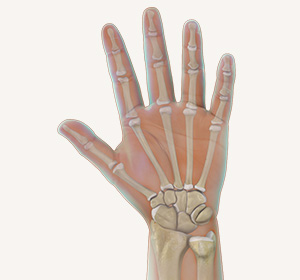
Ganglion cysts are swellings that most commonly develop along the tendons or joints of wrists or hands. They can be found either at the top of the wrist, palm side of the wrist, end joint of a finger or at the base of a finger. A ganglion cyst is not cancerous and will not spread to the other parts of the body. It looks like a water balloon on a stalk and contains a clear fluid or jelly material. Ganglion cysts can be found in people of all ages.
Causes of Ganglion Cysts
Although the exact cause of a ganglion cyst remains unknown, some theories suggest that small cysts are formed when trauma damages the tissue of a joint. The most likely reason might be that these cysts occur because of a defect in the joint capsule or tendon sheath that permits the joint tissue to bulge outwards.
Signs and Symptoms of a Ganglion Cyst
Ganglion cysts generally appear as a mass measuring from 1 to 3 centimeters in diameter. The swelling is usually soft and immobile. It may develop suddenly or gradually over time, vary in size or even disappear or reappear.
A ganglion cyst may or may not be painful. If painful, the pain may be continuous and worsen with the movement of the joint. If the cyst is attached to a tendon, one might feel weak in the affected area.
Diagnosis of a Ganglion Cyst
Your doctor will diagnose a ganglion cyst by performing a physical examination. The diagnosis is confirmed by needle aspiration or ultrasound. Needle aspiration is a process where some amount of the fluid in the cyst is withdrawn using a sterile needle. An ultrasound imaging can reveal whether the lump is solid or fluid-filled (cystic). It can also determine if an artery or blood vessel is causing the lump. Magnetic resonance imaging (MRI) of the wrist may also be ordered to diagnose ganglion cysts.
Treatment of a Ganglion Cyst
In many cases, these cysts may disappear without any treatment. Aspiration is performed by using a needle to drain the fluid from the cyst. After aspiration, an anti-inflammatory steroid is injected into the empty cyst and a splint is placed to immobilize the area. If the cyst becomes painful or limits your activity, causes numbness or tingling of the hand or fingers, your doctor may recommend surgery to remove the ganglion cyst.
For more information about our services or to schedule an appointment, call us at or click here to request an appointment online. We'll respond to you as soon as possible.
-
Send a Referral
-
Send Medical Records
-
Additional InquiresEmail us at [email protected]