Wrist Fracture Fixation
Colorado Springs Orthopaedic Group
Your hands and wrists play an important role in nearly everything you do, from working and exercising to performing everyday activities. Injuries, arthritis, nerve conditions, tendon problems, and other disorders can cause pain, weakness, stiffness, or loss of function.
CSOG provides comprehensive care for conditions affecting the hand, wrist, fingers, and surrounding structures. Our specialists offer a range of nonsurgical and surgical treatments, including therapy, injections, minimally invasive procedures, and advanced surgical techniques when appropriate.
Whether you are dealing with a new injury or a condition that has gradually affected your function, our team will evaluate your individual needs and develop a treatment plan focused on relieving symptoms, restoring function, and helping you return to the activities you enjoy.
What are Wrist Fractures?
Wrist fractures are breaks in any of the bones that form your wrist joint.
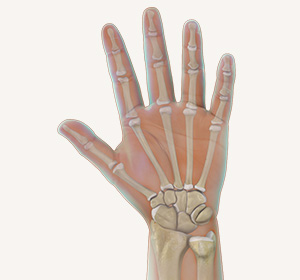
Anatomy of the Wrist
Your wrist is made up of 8 small bones present in your hand and the adjacent ends of the 2 long bones of the forearm. The most common sites of fracture in the wrist are at the radius (the large forearm bone) and the scaphoid (one of the small hand bones).
Causes of Wrist Fractures
Wrist fractures may be caused by:
- Falling on an outstretched arm
- Motor vehicular accidents
- A direct blow to the wrist
Symptoms of Wrist Fractures
Symptoms of wrist fractures may include:
- Sudden, severe wrist pain
- Swelling and deformity of the wrist
- Loss of wrist motion
- Numbness or altered sensation in the fingers
Diagnosis of Wrist Fractures
A diagnosis of a wrist fracture is based on:
- Signs and symptoms at the site of injury
- Physical examination of the wrist
- Imaging studies such as X-rays
Wrist Fracture Fixation
Wrist fracture fixation may be performed by surgical or non-surgical methods depending on the severity of the fracture:
Nonsurgical Wrist Fracture Fixation
Immediate treatment for a wrist fracture will include splinting, icing the area, and pain medication to relieve symptoms. If the fractured ends of the bone are not displaced, external fixation by application of a cast or splint may be enough to treat the wrist fracture.
Surgical Wrist Fracture Fixation
When the fractured ends are significantly displaced, surgery is necessary for wrist fracture fixation. Surgical treatment options include open reduction and internal fixation (ORIF) which involves the use of pins, plates, and screws to properly align the fractured ends and stabilize the fracture from the inside. Another option is open reduction and external fixation, which involves stabilizing the fracture from the outside by means of a metal frame, which is attached to surgical pins that pass through the skin to the fractured ends of the bone.
Recovery after Wrist Fracture Fixation
Recovery time varies from person to person, but it usually takes several weeks for healing and a few months for complete functional recovery. Working with physical therapy and occupational therapy is very important to maximize strength and range of motion of your wrist.
Prognosis of Wrist Fracture Fixation
The prognosis is generally good with most people regaining good function of their wrists following treatment.
For more information about our services or to schedule an appointment, call us at or click here to request an appointment online. We'll respond to you as soon as possible.
-
Send a Referral
-
Send Medical Records
-
Additional InquiresEmail us at [email protected]