Wrist Ligament Tear and Instability
Colorado Springs Orthopaedic Group
Your hands and wrists play an important role in nearly everything you do, from working and exercising to performing everyday activities. Injuries, arthritis, nerve conditions, tendon problems, and other disorders can cause pain, weakness, stiffness, or loss of function.
CSOG provides comprehensive care for conditions affecting the hand, wrist, fingers, and surrounding structures. Our specialists offer a range of nonsurgical and surgical treatments, including therapy, injections, minimally invasive procedures, and advanced surgical techniques when appropriate.
Whether you are dealing with a new injury or a condition that has gradually affected your function, our team will evaluate your individual needs and develop a treatment plan focused on relieving symptoms, restoring function, and helping you return to the activities you enjoy.
What is Wrist Ligament Tear and Instability?
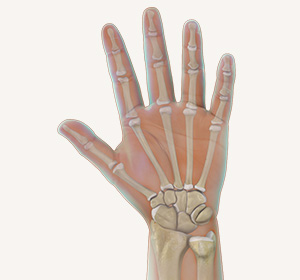
A ligament is a strong, flexible band of fibrous tissue. The wrist has many ligaments that help to keep the wrist bones in proper position providing stability to the joint. A torn ligament causes the wrist bones to move out of their position, which in turn leads to wrist instability as the sprained (torn) ligament can no longer support the wrist bones.
Types of Wrist Ligament Tears
Wrist ligament tears may be classified as:
Grade 1: Wrist ligaments are stretched and have microscopic tears
Grade 2: Wrist ligaments are partially torn
Grade 3: Wrist ligaments are completely torn off from their bone attachments.
Causes of Wrist Ligament Tears and Instability
Wrist ligament tears occur when they get stretched beyond their normal limits. Overstretching of the wrist ligaments may occur due to:
- Falling onto an outstretched hand
- Sudden twist or bend of the wrist
- Extreme pressure on the wrist
What are the Signs or Symptoms of Wrist Ligament Tears?
The major symptoms of a sprained wrist include:
- Swollen and painful wrist
- Limited movement of the wrist and/or hand
- Feeling of popping or tearing sensation in the wrist
- Warmth and tenderness around the injury
- Bruising of the wrist
- Instability of the wrist
What If the Wrist Ligament Tear and Instability are Left Untreated?
Proper treatment of a wrist ligament tear is necessary because if left untreated the condition may result in long-term problems such as chronic wrist pain, stiffness, and development of arthritis in the wrist.
How is a Wrist Ligament Tear Diagnosed?
Your doctor will ask you how the injury occurred, discuss your medical history, and perform a thorough physical exam of your wrist. Additional tests such as X-ray, MRI or Arthrogram may also be ordered to confirm the ligament tear.
How is a Wrist Ligament Tear Treated?
Minor-to-moderate wrist ligament tears may heal on their own with home treatments like the RICE protocol.
- Rest: Rest the injured wrist typically for at least 48 hours.
- Ice: Use ice packs immediately after the injury to reduce pain and swelling; 20-30 minutes at a time, several times a day. However, you must never apply the ice directly on the skin as it can damage skin tissue and cause frostbite.
- Compression: Wear a flexible compression bandage to reduce swelling.
- Elevation: Raise up the wrist higher than your heart as often as possible to allow fluid to drain away from the site of injury.
Additionally, you may be recommended:
- Nonsteroidal anti-inflammatory drugs to help with pain and swelling
- A cast or wrist splint to keep your wrist immobile during the healing phase
- Stretching and strengthening exercises under a physical or occupational therapist to prevent re-injury
However, if the condition is severe (snapped or fully torn ligament with nearby tissues and bone also injured), surgery may be required. The surgery involves using a tendon graft and reconstructing the ligament or reconnecting the ligament to the bone.
For more information about our services or to schedule an appointment, call us at or click here to request an appointment online. We'll respond to you as soon as possible.
-
Send a Referral
-
Send Medical Records
-
Additional InquiresEmail us at [email protected]