Proximal Biceps Tenodesis
Colorado Springs Orthopaedic Group
Your shoulder is one of the body's most mobile joints, allowing you to reach, lift, rotate, and perform countless everyday movements. Because of this mobility, the shoulder can also be susceptible to injuries, overuse, arthritis, and other conditions that cause pain and limit movement.
CSOG provides comprehensive evaluation and treatment for a wide range of shoulder conditions, from sports injuries and tendon problems to arthritis, instability, and fractures. Depending on your condition, treatment may include physical therapy, activity modification, medications, injections, minimally invasive procedures, or surgery.
Our shoulder specialists take the time to understand your symptoms, activity level, and goals so you can receive treatment designed to reduce pain, improve function, and help you get back to the activities that are important to you.
What is Proximal Biceps Tenodesis?
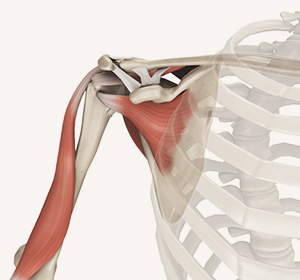
Proximal biceps tenodesis is the surgical reattachment of a torn proximal biceps tendon, which connects the upper part of your biceps muscle to the shoulder.
What Causes a Proximal Biceps Tendon Tear?
- Causes for a proximal biceps tendon tear include:
- Falling on an outstretched arm
- Lifting very heavy objects
- Excessive use of the shoulder during sports and overhead activities
The risk factors for developing a proximal biceps tendon tear include:
- Aging
- Smoking
- Use of certain medications
What are the Symptoms of a Proximal Biceps Tendon Tear?
You may experience one or more of the following symptoms:
- Sudden, sharp shoulder or upper arm pain
- Snapping sound or pop in the shoulder or upper arm region
- Tenderness at the shoulder
- Biceps muscle cramping
- The weakness with shoulder and elbow movements
- Difficulty rotating the forearm
How is Proximal Biceps Tendon Tear Diagnosed?
Your doctor will look for specific signs such as the ‘Popeye Muscle’ sign where the biceps muscle bunches up near the elbow which implies a complete rupture of the proximal tendon. With partial ruptures, you feel pain while bending the arm. To confirm the diagnosis, your doctor may order an MRI or CT scan.
When is Proximal Biceps Tenodesis Indicated?
Proximal biceps tenodesis is recommended by your doctor if you:
- Do not respond to nonsurgical treatment methods
- Have other structures injured within the shoulder
- Are an active individual who requires restoration of muscle strength
How Do You Prepare for Proximal Biceps Tenodesis?
You must avoid medications such as painkillers a few days before the surgery and will have to avoid eating or drinking for a couple of hours before surgery. Your doctor will give you specific instructions on how to prepare for the procedure.
How is Proximal Biceps Tenodesis Performed?
The surgery may be performed by arthroscopy (keyhole surgery) or open surgery if proximal bicep tenodesis is part of a larger surgery. Proximal bicep tenodesis may involve the following steps:
- You are given general anesthesia.
- A tiny incision is made by your surgeon.
- An arthroscope, which is a thin tube-like instrument with a camera, is inserted through the incision to visualize the joint.
- Your surgeon views the inside of the shoulder joint and the bicep tendon tear on a monitor and performs the necessary surgical repair.
- The injured tendon is detached from the shoulder joint (It may already be detached in the case of a complete tear).
- The frayed end of the long head of the bicep is clipped off.
- An anchoring device is used to reattach the tendon to the bone.
- The incision is closed, and a surgical dressing is placed.
Risks associated with Proximal Biceps Tenodesis
Proximal biceps tenodesis is a very safe procedure; however, there may be certain risks which include, but are not limited to, bleeding, infection, delayed healing, or failure to heal.
Recovery after Proximal Biceps Tenodesis
After the procedure, you may be given pain medicine for a few days to keep you comfortable and your shoulder will be supported by a sling for about a month. Physical therapy may be recommended after a week or two to maximize the range of motion and shoulder strength.
For more information about our services or to schedule an appointment, call us at or click here to request an appointment online. We'll respond to you as soon as possible.
-
Send a Referral
-
Send Medical Records
-
Additional InquiresEmail us at [email protected]