Distal Triceps Tear
Colorado Springs Orthopaedic Group
Your shoulder is one of the body's most mobile joints, allowing you to reach, lift, rotate, and perform countless everyday movements. Because of this mobility, the shoulder can also be susceptible to injuries, overuse, arthritis, and other conditions that cause pain and limit movement.
CSOG provides comprehensive evaluation and treatment for a wide range of shoulder conditions, from sports injuries and tendon problems to arthritis, instability, and fractures. Depending on your condition, treatment may include physical therapy, activity modification, medications, injections, minimally invasive procedures, or surgery.
Our shoulder specialists take the time to understand your symptoms, activity level, and goals so you can receive treatment designed to reduce pain, improve function, and help you get back to the activities that are important to you.
What is a Distal Triceps Tear?
A distal triceps tear is a rare condition that occurs when the tendon attaching the triceps muscle in the back of the arm is torn away from its attachment to the ulna bone in the elbow. This injury is more common in middle-aged men than in women.
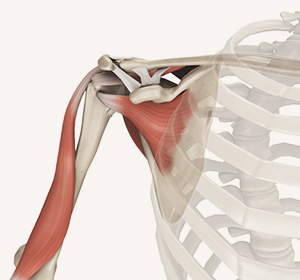
The triceps is the large group of muscles that sits at the back of the upper arm. The triceps muscle complex group consists of three subsets that converge at the back of the elbow into a single tendon that attaches the triceps muscle to the olecranon process of the ulna bone.
What are the Causes of Distal Triceps Tear?
The most common causes of a distal triceps tear include:
- Fall causing sudden forceful bending of the elbow
- Heavy lifting
- Sports injuries
The risk for a distal triceps tear is greater in the presence of the following:
- Pre-existing conditions such as tendonitis
- Drug treatment such as use of steroids
- Autoimmune diseases
What are the Symptoms of a Distal Triceps Tear?
Symptoms of a distal triceps tendon rupture may include:
- A popping-out sensation felt at the back of the elbow.
- A cracking or snapping sound at the time of injury.
- Severe pain initially that gradually recedes.
- Triceps muscle cramping.
- Swelling and tenderness in the elbow.
- Triceps swelling or slight bulging at the back of the arm.
- Weakness in the arm.
- Difficulty with elbow range of motion.
How is Distal Triceps Tear Diagnosed?
A distal triceps tear is diagnosed typically by a thorough physical evaluation. You may be asked to perform triceps extension tests to rule out whether the tendon tear is partial or complete. Your medical history will be discussed. Your provider may order imaging studies to confirm the diagnosis such as an X- ray, ultrasound or MRI scan to look for abnormalities. MRI is considered the gold standard technique for diagnosis because it can demonstrate soft-tissue inflammatory changes of the tendon, as well as torn and retracted tendon fibres.
What are the Treatment Options for Distal Triceps Tear?
Distal triceps tear management includes the following:
Non-surgical treatment:
Conservative treatment methods are used if you have suffered a partial tendon tear. Most partial triceps tendon injuries will heal over 8-12 weeks. The treatment options incude:
- Rest or immobilisation of the arm or elbow with a sling or splint.
- Ice pack or hot water bag application to reduce inflammation.
- Anti-inflammatory medicines to reduce swelling.
- Pain relievers to reduce pain.
- Physical therapy and rehabilitation.
Surgical treatment:
A complete tear of the triceps tendon will require surgery. Surgery involves reattaching the tendon to the ulna in order to avoid permanent elbow extension weakness and muscle atrophy.
Surgery would be planned typically within 1-2 weeks of diagnosis of a complete complex rupture. Triceps tendon repair is done by reattaching the tendon to the bone using drill holes or bone anchors. Following surgery, a splint should be used to immobilise the elbow for one to two weeks, and later replaced with a removable brace.
Physical therapy may be started gradually, depending on the healing process. You may resume your normal activities within 3-4 months.
For more information about our services or to schedule an appointment, call us at or click here to request an appointment online. We'll respond to you as soon as possible.
-
Send a Referral
-
Send Medical Records
-
Additional InquiresEmail us at [email protected]