Wrist Dislocation
Colorado Springs Orthopaedic Group
Your hands and wrists play an important role in nearly everything you do, from working and exercising to performing everyday activities. Injuries, arthritis, nerve conditions, tendon problems, and other disorders can cause pain, weakness, stiffness, or loss of function.
CSOG provides comprehensive care for conditions affecting the hand, wrist, fingers, and surrounding structures. Our specialists offer a range of nonsurgical and surgical treatments, including therapy, injections, minimally invasive procedures, and advanced surgical techniques when appropriate.
Whether you are dealing with a new injury or a condition that has gradually affected your function, our team will evaluate your individual needs and develop a treatment plan focused on relieving symptoms, restoring function, and helping you return to the activities you enjoy.
What is Wrist Dislocation?
Wrist dislocation is a condition where one or more of the bones in the wrist joint become displaced from their normal position, usually due to trauma such as a fall onto an outstretched hand, a motor vehicle accident, or a sports injury.
Anatomy of the Wrist
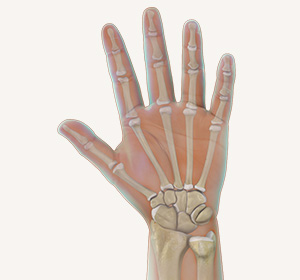
The wrist is a complex joint made up of eight small carpal bones arranged in two rows, connecting the radius and ulna (forearm bones) to the metacarpals (hand bones). These bones are held together by ligaments that provide stability and support movement. Tendons from the forearm muscles pass through the wrist to control hand and finger motion, while nerves and blood vessels supply sensation and circulation to the hand.
Types of Wrist Dislocation
The most common types of wrist dislocation include the following:
- Perilunate Dislocation: This is the most common type of wrist dislocation where the lunate bone (one of 8 carpal bones) remains aligned with the radius, while other carpal bones are displaced.
- Anterior Lunate Dislocation: This type of dislocation is more severe than perilunate dislocation and occurs when the lunate bone is displaced from alignment with the radius, while the other bones remain in place.
- Monteggia Fracture: This type of fracture involves both a break in the ulna bone as well as a dislocation at one end of the radius bone.
- Galeazzi Fracture: This is another type of wrist dislocation that involves both a break in the radius bone as well as a dislocation of the radioulnar joint.
Signs and Symptoms of Wrist Dislocation
Signs and symptoms of wrist dislocation include the following:
- Severe wrist pain
- Swelling and bruising
- Visible deformity
- Limited or no wrist motion
- Numbness or tingling (if nerves are compressed)
Diagnosis of Wrist Dislocation
Diagnosis of a wrist dislocation involves a combination of clinical evaluation and imaging studies. The doctor begins by taking a detailed medical history and performing a physical examination to assess for signs such as swelling, deformity, tenderness, limited range of motion, and possible nerve or blood vessel involvement. Imaging is essential to confirm the diagnosis, with X-rays being the first and most commonly used test to identify the type and extent of dislocation as well as any associated fractures. In more complex cases, a CT scan may be used to provide a clearer view of the bone alignment, while an MRI can help evaluate soft tissue injuries, such as torn ligaments or cartilage damage.
Treatment for Wrist Dislocation
Treatment for wrist dislocation focuses on realigning the bones, relieving pain, and restoring function. Initial management often involves closed reduction, where the dislocated bones are manually realigned, usually under sedation or anesthesia. After reduction, the wrist is immobilized with a splint or cast for several weeks to allow healing. If the dislocation is complex, involves fractures, or cannot be corrected manually, surgery (open reduction and internal fixation) may be needed to repair bones, ligaments, or tendons. After immobilization, physical therapy is essential to regain strength, flexibility, and range of motion. Pain medications and anti-inflammatory drugs are often used during recovery.
For more information about our services or to schedule an appointment, call us at or click here to request an appointment online. We'll respond to you as soon as possible.
-
Send a Referral
-
Send Medical Records
-
Additional InquiresEmail us at [email protected]