Wrist Open Reduction and Internal Fixation
Colorado Springs Orthopaedic Group
Your hands and wrists play an important role in nearly everything you do, from working and exercising to performing everyday activities. Injuries, arthritis, nerve conditions, tendon problems, and other disorders can cause pain, weakness, stiffness, or loss of function.
CSOG provides comprehensive care for conditions affecting the hand, wrist, fingers, and surrounding structures. Our specialists offer a range of nonsurgical and surgical treatments, including therapy, injections, minimally invasive procedures, and advanced surgical techniques when appropriate.
Whether you are dealing with a new injury or a condition that has gradually affected your function, our team will evaluate your individual needs and develop a treatment plan focused on relieving symptoms, restoring function, and helping you return to the activities you enjoy.
What is Open Reduction and Internal Fixation of the Wrist?
Open reduction and internal fixation of the wrist is a surgical technique employed for the treatment of severe wrist fractures to restore normal anatomy and improve range of motion and function.
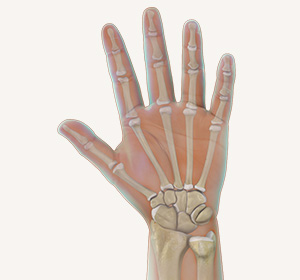
A wrist fracture refers to a break in one or more bones in the wrist. The most common sites of fracture in the wrist are the radius (the large forearm bone) and the scaphoid (one of the small hand bones).
The wrist is comprised of two bones in the forearm (the radius and the ulna) and 8 small bones present in your hand. The bones meet to form multiple large and small joints.
Causes of Wrist Fractures
Wrist fractures can be caused due to a fall on an outstretched arm or from injury due to accidents such as a motor vehicle accident or workplace injuries. A wrist fracture is more common in people with osteoporosis, a condition marked by brittleness of the bones.
Signs and Symptoms of Wrist Fractures
Signs and symptoms of wrist fractures include:
- Severe pain
- Swelling
- Tenderness
- Bruising
- Deformity of the wrist
Diagnosing Wrist Fractures
Your doctor will diagnose a wrist fracture by reviewing your signs and symptoms and performing a thorough physical examination. Your physician will:
- Inspect to see any cuts from the injury as bone fragments can cut through the skin and create lacerations.
- Palpate your arm to determine areas of tenderness as they can indicate injuries or broken bones.
- Check your pulse at the wrist to ensure good blood flow via the forearm to your hand.
- Check your fingers and wrist for proper hand movement as injury to nerves may cause weakness and numbness of the hand and wrist.
If this is not satisfactory, your doctor will order an X-ray of the forearm to detect broken or displaced bone. Sometimes, a computed tomography (CT) scan may be required to get a detailed view of the fractured fragments as well as injuries to soft tissues.
Preparation for Wrist Open Reduction and Internal Fixation
Prior to open reduction and internal fixation of the wrist fracture, you may have:
- Physical exam to inspect blood circulation and nerves affected by the fracture
- X-ray, CT scan, or MRI scan to assess surrounding structures and broken bone
- Blood tests
- Depending on the type of fracture you have sustained, you may be given a tetanus shot if you are not up to date with your immunization
- A discussion with an anesthesiologist to determine the type of anesthesia you may undergo
- A discussion with your doctor about the medications and supplements you are taking and if any should be stopped
- A discussion about the need to avoid food and drink past midnight the night prior to your surgery
Procedure for ORIF of the Wrist
Open reduction and internal fixation is the procedure employed most often to treat displaced wrist fractures.
The surgery is performed under sterile conditions in the operating room under general or local anesthesia.
- After sterilizing the affected area, your surgeon will make an incision around the wrist muscles.
- Your surgeon will locate the fracture by carefully sliding in between the muscles of the wrist.
- The cuts from the injury and surfaces of the fractured bone are thoroughly cleaned out.
- After carefully visualizing the fracture, the bone fragments are first repositioned (reduced) into their normal alignment.
- The fragments of bone are then held in place with wires, screws, pins, or metal plates attached to the outer surface of the bone.
- After securing the bone, the incisions are closed by suturing or staples and covered with sterile dressings.
Postoperative Care
You may have some pain post procedure and pain medication will be prescribed to keep you comfortable. After surgery, your arm will be placed in a short splint for support and protection. You will need to keep your arm immobile for several weeks with the aid of a sling to allow bone healing. Your doctor will provide instructions on dressings and incision care.
Physiotherapy is suggested to prevent arm stiffness, strengthen muscles, and restore range of motion. You will also be advised on a healthy diet and supplements high in vitamin D and calcium to promote bone healing.
Depending on your health condition and the extent of the injury, you may be able to go home the same day with scheduled follow-up appointments for monitoring progress and for stitches or staple removal if necessary. Your doctor will order X-rays to monitor healing throughout your treatment. Most people return to their normal activities within a couple of months.
Risks and Complications
As with any surgery, some of the potential risks and complications of open reduction and internal fixation of wrist fractures may include:
- Bleeding
- Swelling
- Infection
- Pain
- Anesthetic complications
- Damage to nerves and blood vessels
- Hardware irritation
- Fracture nonhealing
- Broken hardware
- Repeat surgery
For more information about our services or to schedule an appointment, call us at or click here to request an appointment online. We'll respond to you as soon as possible.
-
Send a Referral
-
Send Medical Records
-
Additional InquiresEmail us at [email protected]