Distal Radioulnar Joint (DRUJ) Instability
Colorado Springs Orthopaedic Group
Your hands and wrists play an important role in nearly everything you do, from working and exercising to performing everyday activities. Injuries, arthritis, nerve conditions, tendon problems, and other disorders can cause pain, weakness, stiffness, or loss of function.
CSOG provides comprehensive care for conditions affecting the hand, wrist, fingers, and surrounding structures. Our specialists offer a range of nonsurgical and surgical treatments, including therapy, injections, minimally invasive procedures, and advanced surgical techniques when appropriate.
Whether you are dealing with a new injury or a condition that has gradually affected your function, our team will evaluate your individual needs and develop a treatment plan focused on relieving symptoms, restoring function, and helping you return to the activities you enjoy.
What is Distal Radioulnar Joint (DRUJ) Instability?
Distal radioulnar joint instability is the abnormal orientation or movement of the radius and ulna bones at the wrist in relation to one another. Injury to the tendons, ligaments and/or muscles stabilizing the joint may cause partial or complete dislocation.
Anatomy
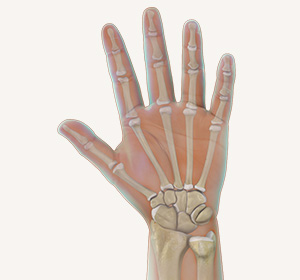
The articular surface of the radius bone referred to as the ulnar notch, and the head of the ulna bone form the distal radioulnar joint. A complex structure called the triangular fibrocartilage complex (TFCC) contributes to wrist stability.
Symptoms
A deformed wrist may be a sign of DRUJ instability. Other symptoms include:
- Wrist pain
- Inflammation
- Weakness
- Decreased range of motion
Risk Factors
The common risk factors include:
- Trauma
- Fall on an outstretched hand
- Congenital bone defects
- Sports such as baseball, racquetball or tennis
Diagnosis
Your doctor will assess your symptoms, take your medical history, and perform a physical exam. Imaging tests such as X-ray, MRI or CT-scans may be ordered.
Diagnosis is confirmed in the following cases:
- Injury to the TFCC
- Widening of the joint space between the radius and ulna
Treatment
Non-surgical Treatment
Your doctor will prescribe pain medication as needed. Use of ice packs may be suggested to reduce inflammation. Other non-surgical treatment options include:
- Massage therapy
- Physical therapy
- Acupuncture
- Immobilization by a splint or cast
Surgical Treatment
Surgery is recommended by your doctor if you do not respond to non-surgical treatment options, and involves the following:
- The surgery may be performed under general or local anesthesia.
- A few small incisions are made at the wrist near the radioulnar joint.
- An arthroscope, a small, fiber-optic instrument consisting of a lens, light source, and video camera, is inserted. The camera projects images of the inside of the joint onto a large monitor, allowing your surgeon to look for any damage, assess the type of injury and repair the problem.
- Debridement, or cleaning out the damaged tissue, is performed by your surgeon.
- K-wires are used to suture the separated ligament.
- The incision is closed and a bandage is applied.
For more information about our services or to schedule an appointment, call us at or click here to request an appointment online. We'll respond to you as soon as possible.
-
Send a Referral
-
Send Medical Records
-
Additional InquiresEmail us at [email protected]