TFCC Repair (Open and Arthroscopic)
Colorado Springs Orthopaedic Group
Your hands and wrists play an important role in nearly everything you do, from working and exercising to performing everyday activities. Injuries, arthritis, nerve conditions, tendon problems, and other disorders can cause pain, weakness, stiffness, or loss of function.
CSOG provides comprehensive care for conditions affecting the hand, wrist, fingers, and surrounding structures. Our specialists offer a range of nonsurgical and surgical treatments, including therapy, injections, minimally invasive procedures, and advanced surgical techniques when appropriate.
Whether you are dealing with a new injury or a condition that has gradually affected your function, our team will evaluate your individual needs and develop a treatment plan focused on relieving symptoms, restoring function, and helping you return to the activities you enjoy.
What is TFCC Repair (Open and Arthroscopic)?
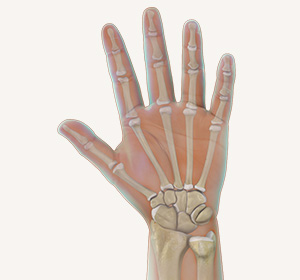
TFCC (Triangular Fibrocartilage Complex) repair is a surgical procedure to fix a tear or damage in the TFCC - a cartilage structure located on the ulnar side (little finger side) of the wrist that helps stabilize the wrist bones (particularly the distal radius and ulna) and cushion the joint. TFCC tears can result from trauma (e.g., falls), repetitive wrist motion, or degenerative changes.
There are two main surgical approaches: open TFCC repair and arthroscopic TFCC repair. Open TFCC repair is a traditional surgery involving a larger incision over the ulnar side of the wrist. It offers better access for complex or central tears, especially if the tear is deep, longstanding, or not accessible arthroscopically. Arthroscopic TFCC repair is a minimally invasive technique involving small incisions and a camera (arthroscope). The surgeon visualizes the tear and uses tiny instruments to debride (clean) or suture the damaged cartilage.
What are the Indications for TFCC Repair (Open and Arthroscopic)?
TFCC repair is typically indicated for:
- Persistent ulnar-sided wrist pain unresponsive to non-surgical treatments
- Wrist instability or clicking
- Loss of grip strength
- Positive fovea sign or pain with distal radioulnar joint (DRUJ) loading
- Confirmed TFCC tear on imaging (MRI) or wrist arthroscopy
What Does the Procedure for TFCC Repair (Open and Arthroscopic) Involve?
The procedure for TFCC repair (open and arthroscopic) is typically performed under regional or general anesthesia and involves the following steps.
Arthroscopic TFCC Repair (Minimally Invasive):
- Two to three small keyhole incisions (portals) are made around the wrist to insert an arthroscope (camera) and surgical tools.
- The surgeon inspects the wrist joint and identifies the TFCC tear using the camera.
- For small or peripheral tears, sutures or anchors are used to reattach the torn TFCC to the bone.
- If the tear is central and irreparable, trimming or debridement of damaged tissue is performed.
- After the repair is completed, the incisions are closed with sutures or steri-strips and covered with a sterile dressing.
Open TFCC Repair (Traditional Approach):
- A larger incision is made on the ulnar (small finger) side of the wrist to access the TFCC directly.
- Soft tissues and wrist structures are carefully dissected to expose the tear.
- The surgeon reattaches the TFCC to the ulnar fovea or bone using non-absorbable sutures, suture anchors, or bone tunnels.
- Any instability in the distal radioulnar joint may also be corrected.
- Finally, the tissues and skin are sutured in layers, and a sterile dressing is applied.
Both approaches aim to restore wrist stability, relieve pain, and preserve function, with the choice of method based on the tear's location, severity, and the surgeon's assessment.
What Does Postoperative Care for TFCC Repair (Open and Arthroscopic) Involve?
Postoperative care for TFCC repair, whether open or arthroscopic, involves wrist immobilization in a splint or cast for about 4 to 6 weeks to protect the repair and allow healing. During this period, patients are advised to avoid lifting or rotating the wrist. Once the immobilization phase ends, a structured physical therapy program is initiated to gradually restore range of motion, strength, and function. Pain and swelling are managed with medications and ice therapy. Full recovery can take several months, and patients are typically advised to avoid heavy or repetitive wrist activities until cleared by their surgeon. Regular follow-up visits are essential to monitor healing and guide rehabilitation.
What are the Risks and Complications of TFCC Repair (Open and Arthroscopic)?
Risks and complications of TFCC repair (open and arthroscopic) may include infection, nerve or tendon injury, wrist stiffness, persistent pain, reduced range of motion, incomplete healing of the tear, or re-tearing of the TFCC. In some cases, additional procedures may be needed if symptoms persist.
What are the Benefits of TFCC Repair (Open and Arthroscopic)?
Benefits of TFCC repair (open and arthroscopic) include reduced wrist pain, improved stability of the distal radioulnar joint, enhanced grip strength, better range of motion, and the ability to return to daily activities or sports with improved function and comfort.
For more information about our services or to schedule an appointment, call us at or click here to request an appointment online. We'll respond to you as soon as possible.
-
Send a Referral
-
Send Medical Records
-
Additional InquiresEmail us at [email protected]