Fractures of the Hand and Fingers
Colorado Springs Orthopaedic Group
Your hands and wrists play an important role in nearly everything you do, from working and exercising to performing everyday activities. Injuries, arthritis, nerve conditions, tendon problems, and other disorders can cause pain, weakness, stiffness, or loss of function.
CSOG provides comprehensive care for conditions affecting the hand, wrist, fingers, and surrounding structures. Our specialists offer a range of nonsurgical and surgical treatments, including therapy, injections, minimally invasive procedures, and advanced surgical techniques when appropriate.
Whether you are dealing with a new injury or a condition that has gradually affected your function, our team will evaluate your individual needs and develop a treatment plan focused on relieving symptoms, restoring function, and helping you return to the activities you enjoy.
Hand Injuries
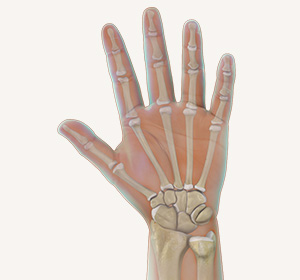
The hand is one of the most flexible and useful parts of our body. Because of overuse in various activities, the hands are more prone to injuries, such as sprains and strains, fractures and dislocations, lacerations and amputations while operating machinery, bracing against a fall and during sports.
Fingers are fine structures of the human body that assist in daily routine activities through coordinated movements. Any abnormality affecting the fingers can have a huge impact on the quality of life.
What is a Fracture of the Hand
A fracture is a break in the bone, which occurs when force greater than the bearable limit is applied against a bone. The most common symptoms of any fracture include severe pain, swelling, bruising or bleeding, deformity and discoloration of the skin and limited mobility of the hand.
What is a Finger Fracture?
A finger fracture is not a minor injury, and if left untreated, can lead to stiffness, pain, disruption of the alignment of the whole hand and interference with specialized functions such as grasping or manipulating objects. Finger fractures commonly occur during sports activities, when you break a fall or while operating machinery.
Diagnosis of Hand and Finger Fractures
The diagnosis of a hand or finger fracture is based on your history, physical examination and X-ray imaging to determine the type and severity of the fracture. X-rays are the most widely used diagnostic tools for the evaluation of fractures.
Treatment for Hand and Finger Fractures
The objective of early fracture management is to control bleeding, provide pain relief, prevent ischemic injury (bone death) and remove sources of infection such as foreign bodies and dead tissues. The next step in fracture management is the reduction of the fracture and its maintenance. It is important to ensure that the involved part of the body returns to its function after the fracture heals. To achieve this, maintenance of fracture reduction with immobilization technique is performed by either nonoperative or surgical methods.
Nonoperative Therapy for Hand and Finger Fractures
The bones can be realigned by manipulating them into place. Following this, splints, casts or braces made up of fiberglass or Plaster of Paris material are used to immobilize the bones until they heal. A cast is worn for 3 to 6 weeks.
Surgical Therapy for Hand and Finger Fractures
During surgery, the fracture site is adequately exposed, the bones realigned and the fracture is reduced internally using wires, plates, screws and intramedullary nails.
Rehabilitation following Treatment of Hand and Finger Fractures
Fractures may take several weeks to months to heal completely. You should limit your activities even after the removal of the cast or brace so that the bone becomes solid enough to bear stress. The rehabilitation program involves exercises and gradual increase in activity levels to strengthen the muscles and improve range of motion.
For more information about our services or to schedule an appointment, call us at or click here to request an appointment online. We'll respond to you as soon as possible.
-
Send a Referral
-
Send Medical Records
-
Additional InquiresEmail us at [email protected]