Small Joint Arthroscopy (Wrist and Fingers)
Colorado Springs Orthopaedic Group
Your hands and wrists play an important role in nearly everything you do, from working and exercising to performing everyday activities. Injuries, arthritis, nerve conditions, tendon problems, and other disorders can cause pain, weakness, stiffness, or loss of function.
CSOG provides comprehensive care for conditions affecting the hand, wrist, fingers, and surrounding structures. Our specialists offer a range of nonsurgical and surgical treatments, including therapy, injections, minimally invasive procedures, and advanced surgical techniques when appropriate.
Whether you are dealing with a new injury or a condition that has gradually affected your function, our team will evaluate your individual needs and develop a treatment plan focused on relieving symptoms, restoring function, and helping you return to the activities you enjoy.
What is Small Joint Arthroscopy (Wrist and Fingers)?
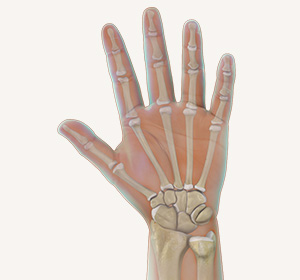
Small joint arthroscopy is a minimally invasive surgical technique used to diagnose and treat conditions affecting small joints, such as those in the wrist and fingers. It involves inserting a tiny camera (arthroscope) and specialized instruments through small incisions to view and operate inside the joint without the need for large open surgery.
What are the Indications for Small Joint Arthroscopy (Wrist and Fingers)?
Small joint arthroscopy is typically indicated for conditions of the wrist and fingers, such as:
- Wrist ligament tears (e.g., TFCC injuries)
- Chronic wrist pain or instability
- Ganglion cyst removal
- Loose bodies or cartilage debris
- Joint synovitis (inflammatory tissue)
- Diagnostic evaluation of unexplained joint symptoms
- Arthritis-related issues or joint surface damage
What Does the Procedure for Small Joint Arthroscopy (Wrist and Fingers) Involve?
The small joint arthroscopy procedure is typically performed under regional or general anesthesia, depending on the joint involved and the extent of the procedure. In general, the procedure involves the following steps:
- The hand and wrist are sterilized and positioned to allow easy access to the joint.
- A tourniquet may be applied to reduce bleeding and improve visibility.
- One or more tiny incisions (portals) are made around the wrist or finger joint, usually 2–3 millimeters in size.
- A small arthroscope (a pencil-sized camera) is inserted into one portal to project the joint's interior onto a monitor.
- Additional small incisions are used to insert fine surgical instruments.
- The surgeon systematically examines joint structures such as cartilage, ligaments, synovium, and bone surfaces for damage or abnormalities.
- Damaged tissue may be trimmed (debridement), ganglion cysts removed, loose bodies extracted, or ligament repairs performed.
- In some cases, arthroscopy is used to assist fracture fixation or perform synovectomy.
- Once the procedure is completed, instruments are removed, the small incisions are closed with sutures or adhesive strips, and a sterile dressing is applied.
What Does Postoperative Care for Small Joint Arthroscopy (Wrist and Fingers) Involve?
After small joint arthroscopy of the wrist or fingers, the patient is monitored briefly in the recovery area before being discharged, usually on the same day. After the procedure, the hand is typically placed in a soft dressing or splint to minimize movement and protect the surgical site. Elevation and cold therapy are recommended to reduce swelling and discomfort. Pain is usually managed with oral medications. Within a few days to a week, depending on the extent of the surgery, patients may begin gentle range-of-motion exercises under the guidance of a hand therapist. Sutures are removed in 10–14 days, and most individuals can return to light activities within a few weeks, although full recovery may take longer for more complex repairs. Regular follow-ups with the surgeon help monitor healing and progress.
What are the Risks and Complications of Small Joint Arthroscopy (Wrist and Fingers)?
Risks and complications of small joint arthroscopy (wrist and fingers) include infection, bleeding, nerve or blood vessel injury, joint stiffness, persistent pain, swelling, and in rare cases, incomplete resolution of symptoms or the need for additional surgery.
What are the Benefits of Small Joint Arthroscopy (Wrist and Fingers)?
Benefits of small joint arthroscopy (wrist and fingers) include smaller incisions, less pain, quicker recovery, improved joint visualization, lower risk of complications, and better cosmetic outcomes.
For more information about our services or to schedule an appointment, call us at or click here to request an appointment online. We'll respond to you as soon as possible.
-
Send a Referral
-
Send Medical Records
-
Additional InquiresEmail us at [email protected]