Adult Forearm Fractures
Colorado Springs Orthopaedic Group
Your hands and wrists play an important role in nearly everything you do, from working and exercising to performing everyday activities. Injuries, arthritis, nerve conditions, tendon problems, and other disorders can cause pain, weakness, stiffness, or loss of function.
CSOG provides comprehensive care for conditions affecting the hand, wrist, fingers, and surrounding structures. Our specialists offer a range of nonsurgical and surgical treatments, including therapy, injections, minimally invasive procedures, and advanced surgical techniques when appropriate.
Whether you are dealing with a new injury or a condition that has gradually affected your function, our team will evaluate your individual needs and develop a treatment plan focused on relieving symptoms, restoring function, and helping you return to the activities you enjoy.
What are Forearm Fractures?
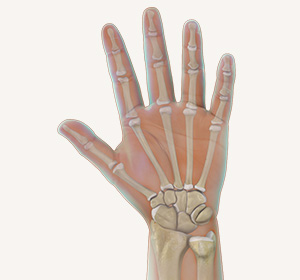
The forearm is made up of 2 bones, namely, the radius and ulna. The primary function of your forearm is rotation i.e., the ability to turn your palm up and down. The fracture of the forearm affects the ability to rotate your arm, as well as bend and straighten the wrist and elbow. The breaking of the radius or ulna in the middle of the bone requires a strong force and is most commonly seen in adults. In most of the cases, both bones are broken during a forearm fracture.
Causes of Adult Forearm Fractures
The forearm bones can break in many ways. The bones can crack slightly or can break into many pieces. Forearm fractures are generally due to automobile accidents, direct blow on the forearm or fall on an outstretched arm during sports, climbing stairs, etc.
Symptoms of Adult Forearm Fractures
The symptoms of a forearm fracture include intense pain in the arm, bruising and swelling. Your fractured forearm may appear bent and shorter compared to your other arm. You may experience numbness or weakness in the fingers and wrist. You may be unable to rotate your arm. Sometimes, a broken bone sticks out through the skin or the wound penetrates down to the broken bone.
Diagnosis of Adult Forearm Fractures
Your doctor will review your medical history and perform a physical examination by feeling your arm thoroughly to determine tenderness. You may be asked to get an X-ray done to determine displaced or broken bones.
Treatments for Adult Forearm Fractures
If you have a forearm fracture, you will be immediately rushed to the emergency room for treatment. Treatment of forearm fractures aims at putting back the broken bones into position and preventing them from moving out of place until they are completely healed.
Non-surgical Treatments for Adult Forearm Fractures
In case only one bone is broken and is not out of place, your doctor might treat it with a cast or brace, and provide a sling to keep your arm in position. Your doctor will closely monitor the healing of the fracture. If the fracture shifts in position, you may be advised to undergo surgery to fix the bones back together.
Surgical Treatments for Adult Forearm Fractures
When both forearm bones are broken, surgery is usually required. During surgery, the cuts from the injury will be cleaned and the bone fragments are repositioned into their normal alignment. They are held together with screws and metal plates attached to the outer surface of the bone. The incision is sutured firmly and a sling is provided to facilitate healing.
For more information about our services or to schedule an appointment, call us at or click here to request an appointment online. We'll respond to you as soon as possible.
-
Send a Referral
-
Send Medical Records
-
Additional InquiresEmail us at [email protected]