Forearm Fractures in Children
Colorado Springs Orthopaedic Group
Your hands and wrists play an important role in nearly everything you do, from working and exercising to performing everyday activities. Injuries, arthritis, nerve conditions, tendon problems, and other disorders can cause pain, weakness, stiffness, or loss of function.
CSOG provides comprehensive care for conditions affecting the hand, wrist, fingers, and surrounding structures. Our specialists offer a range of nonsurgical and surgical treatments, including therapy, injections, minimally invasive procedures, and advanced surgical techniques when appropriate.
Whether you are dealing with a new injury or a condition that has gradually affected your function, our team will evaluate your individual needs and develop a treatment plan focused on relieving symptoms, restoring function, and helping you return to the activities you enjoy.
What are Forearm Fractures in Children?
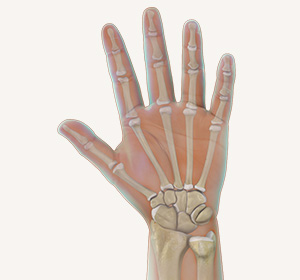
The radius (bone on the thumb side) and ulna (bone on the little-finger side) are the two bones of the forearm. Forearm fractures can occur near the wrist, near the elbow or in the middle of the forearm. Apart from this, the bones in children are prone to a unique injury known as a growth plate fracture. The growth plate, which is made of cartilage (flexible tissue) is present at the ends of the bones in children and helps in the determination of length and shape of the mature bone.
The healing of fractures in children is quicker than that in adults. Thus, if a fracture is suspected in a child, it is necessary to seek immediate medical attention for proper alignment of the bones.
Types of Forearm Fractures in Children
Forearm bones may break in many ways. Fractures may be open, where the bone protrudes through the skin or closed, where the broken bone does not pierce the skin. The common types of fractures in children include:
- Buckle or torus fracture: A stable fracture that compresses the bone on one side, forming a buckle on the opposite side of the bone, without breaking the bone
- Greenstick fracture: One side of the bone breaks and bends the bone on the other side
- Galeazzi fracture: Displacement of the radius and dislocation of the ulna at the wrist where both bones meet
- Metaphyseal fracture: Fracture affecting the upper or lower portion of the bone shaft
- Monteggia fracture: Fractured ulna and dislocated head of the radius
- Growth plate fracture: Fracture occurring at or across the growth plate
Causes of Forearm Fractures in Children
Forearm fractures in children are caused due to a fall on an outstretched arm or direct hit on the forearm, which may result in the breakage of one or both bones (radius and ulna).
Signs and Symptoms of Forearm Fractures in Children
A fractured forearm causes severe pain and numbness. The other signs and symptoms include:
- Swelling
- Tenderness
- Inability to turn or rotate the forearm
- Deformed forearm, wrist or elbow
- Bruising or discoloration of the skin
- Popping or snapping sound during the injury
Diagnosis of Forearm Fractures in Children
Forearm fractures in children can be diagnosed by analyzing X-ray images of the wrist, elbow or the forearm.
Treatment of Forearm Fractures in Children
The treatment of forearm fractures in children is based on the location, type of fracture, degree of bone displacement and its severity.
Non-surgical therapy of Forearm Fractures in Children
Your child’s doctor will advise you to apply an ice pack over a thin towel on the affected area for 15-20 minutes 3-4 times a day, to relieve pain and swelling. For severe angled fractures, in which the bones have not broken through the skin, your doctor will align the bones properly without the need for surgery (closed reduction). A splint or cast may be required for 3 to 4 weeks for a stable buckle fracture. Immobilization for 6 to 10 weeks is recommended for more serious fractures.
Surgical Treatment of Forearm Fractures in Children
Surgery may be necessary for severe fractures such as fractures of the growth plate or the joint. Other conditions, such as broken skin, bone displacement, unstable fractures, misaligned bones, and bones healing in an improper position may also require surgical repair. Your surgeon will first align the bones through an incision and use fixation devices such as pins or metal implants to hold the bones in place while the wound heals. A cast or a splint may be placed to hold the bones in place.
For more information about our services or to schedule an appointment, call us at or click here to request an appointment online. We'll respond to you as soon as possible.
-
Send a Referral
-
Send Medical Records
-
Additional InquiresEmail us at [email protected]