Bony Instability Reconstruction of the Shoulder
Colorado Springs Orthopaedic Group
Your shoulder is one of the body's most mobile joints, allowing you to reach, lift, rotate, and perform countless everyday movements. Because of this mobility, the shoulder can also be susceptible to injuries, overuse, arthritis, and other conditions that cause pain and limit movement.
CSOG provides comprehensive evaluation and treatment for a wide range of shoulder conditions, from sports injuries and tendon problems to arthritis, instability, and fractures. Depending on your condition, treatment may include physical therapy, activity modification, medications, injections, minimally invasive procedures, or surgery.
Our shoulder specialists take the time to understand your symptoms, activity level, and goals so you can receive treatment designed to reduce pain, improve function, and help you get back to the activities that are important to you.
What is Bony Instability Reconstruction of the Shoulder?
The shoulder is the most flexible joint in the body. Injury and trauma can tear or stretch the labrum and/or ligaments, causing loosening and instability of the shoulder joint which can lead to partial or complete dislocation of the joint. Bony instability, also known as shoulder instability or glenohumeral instability, refers to the inability to retain the head of the humerus in the glenoid socket due to serious trauma sustained by the soft tissues, and glenoid and humeral bones of the shoulder joint.
Bony instability reconstruction of the shoulder is a surgical procedure to treat shoulder instability by relocating a piece of bone with an attached tendon to the shoulder joint.
What is the Anatomy of the Shoulder?
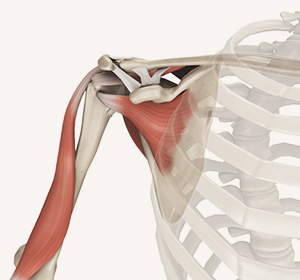
The shoulder is a ball and socket joint where the ball is formed by the head of the upper arm bone or humerus and the socket is formed by a shallow cavity in the shoulder blade called the glenoid. The glenoid is surrounded by a raised ridge of fibrous cartilage called the labrum which provides some depth to the socket, increasing the stability of the joint. Stability is further enhanced by ligaments that form a capsule around the joint, as well as muscles and tendons which center the humeral head in the socket.
What are the Indications for Bony Instability Reconstruction of the Shoulder?
Shoulder reconstruction for bony instability is mostly indicated when conservative treatment measures such as prescription medicines, immobilization, activity modification, physical therapy, and closed reduction fail to provide satisfactory results. Some of the other indications that warrant shoulder reconstruction include:
- Anterior shoulder instability
- Chronic shoulder dislocation
- Bankart tear or injury
- SLAP tear
- Hill–Sachs fracture
What is the Procedure for Bony Instability Reconstruction of the Shoulder?
The procedure is performed under general anesthesia with you in a semi-reclined or beach-chair position.
- An incision of 5 cm is made from your shoulder blade towards the armpit.
- Retractors are used to separate the muscles of the shoulder and chest and expose the coracoid process (a small hook-like process of the shoulder bone) and its attached tendons.
- The coracoid process is freed of its attachments, and along with the conjoined tendon, is transected from its base.
- Holes are drilled into the transected coracoid process.
- The subscapularis muscle, which passes in front of the shoulder joint, is split in line with its fibers.
- The capsule of the shoulder joint is entered and the glenoid is exposed and prepared to receive the coracoid.
- The transected coracoid with the conjoined tendon is passed through the separated subscapularis muscle and fixed to the glenoid rim with screws through the previously drilled holes. This increases the glenoid surface and stabilizes the joint. The conjoined tendon and subscapularis muscles provide additional stability by acting as a sling.
- Upon completion, the instruments are withdrawn, the incision is closed and covered with a sterile bandage.
What Does Postoperative Care for Bony Instability Reconstruction of the Shoulder?
The recovery process involves at least 6 months of rehabilitation. In general, postoperative care instructions and recovery involves the following:
- You will be transferred to the recovery area to be monitored until you are awake from the anesthesia.
- Your nurse will monitor your blood oxygen level and other vital signs as you recover.
- You will notice some pain and discomfort in the shoulder area. Medications will be provided for comfort.
- Apply ice packs on the shoulder to help reduce the swelling.
- Use a pillow under your shoulder while lying in bed for comfort.
- Medications will also be prescribed as needed for symptoms associated with anesthesia, such as vomiting and nausea.
- Keep your surgical site clean and dry. Instructions on surgical site care and bathing will be provided.
- Refrain from smoking as it can negatively affect the healing process.
- Eating a healthy diet rich in vitamin D is strongly advised to promote healing and a faster recovery.
- Refrain from strenuous activities, lifting heavy weights, and driving for the first 6 weeks. Gradual increase in activities over a period of time is recommended.
- An individualized physical therapy protocol is designed to help strengthen shoulder muscles and optimize shoulder function.
- You will be able to return to your normal activities in a couple of months; however, return to sports may take 4 to 6 months.
- A follow-up appointment will be scheduled to monitor your progress.
What are the Risks and Complications of Bony Instability Reconstruction of the Shoulder?
Shoulder reconstruction for bony instability is a relatively safe procedure; however, as with any surgery, there are risks and complications that could occur, such as:
- Infection
- Bleeding
- Stiffness or restricted movement
- Damage to adjacent soft tissue structures
- Anesthetic complications
- Recurrence of instability
- Failure of the procedure
For more information about our services or to schedule an appointment, call us at or click here to request an appointment online. We'll respond to you as soon as possible.
-
Send a Referral
-
Send Medical Records
-
Additional InquiresEmail us at [email protected]