Partial Wrist Replacement
Colorado Springs Orthopaedic Group
Your hands and wrists play an important role in nearly everything you do, from working and exercising to performing everyday activities. Injuries, arthritis, nerve conditions, tendon problems, and other disorders can cause pain, weakness, stiffness, or loss of function.
CSOG provides comprehensive care for conditions affecting the hand, wrist, fingers, and surrounding structures. Our specialists offer a range of nonsurgical and surgical treatments, including therapy, injections, minimally invasive procedures, and advanced surgical techniques when appropriate.
Whether you are dealing with a new injury or a condition that has gradually affected your function, our team will evaluate your individual needs and develop a treatment plan focused on relieving symptoms, restoring function, and helping you return to the activities you enjoy.
What is a Partial Wrist Replacement?
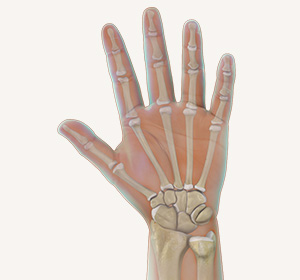
Partial wrist replacement, also known as partial wrist arthroplasty, is a surgical procedure that involves replacing only the damaged part of the wrist joint with a prosthetic implant. This procedure is typically considered when there is significant arthritis or damage in one area of the wrist, while the rest of the joint remains relatively healthy.
Indications for Partial Wrist Replacement
Partial wrist replacement is typically indicated for patients who have:
- Severe arthritis limited to a specific part of the wrist joint.
- Post-traumatic arthritis or injury affecting a particular area of the wrist.
- Degenerative joint conditions where total wrist fusion might limit desired movement.
- Avascular necrosis (death of bone tissue due to lack of blood supply) affecting a part of the wrist.
- Pain and limited motion that has not responded to conservative treatments like medications or physical therapy.
Preparation for Partial Wrist Replacement
In general, preparation for partial wrist replacement may include the following:
- A review of your medical history, medications, allergies, and a physical examination to evaluate overall health, the extent of wrist damage, and suitability for partial wrist replacement.
- Imaging studies such as X-rays and CT scans may be used to assess the specific areas of the wrist that are damaged and plan the surgery.
- Review and adjust any medications you are taking. Certain medications, such as blood thinners, may need to be discontinued before surgery.
- You are typically instructed to fast (no food or drink) for a specified period before surgery, usually starting at midnight the night before the procedure.
- You will sign an informed consent form after the risks and benefits of the procedure have been explained.
Procedure for Partial Wrist Replacement
In general, a partial wrist replacement is performed under general anesthesia and may involve the following steps:
- A surgical incision is made on the back of the wrist to access the joint. The size and location of the incision depend on the specific area of the wrist being treated.
- The surgeon carefully separates the soft tissues and moves tendons and nerves aside to expose the wrist joint.
- The damaged portions of the wrist bones (such as the scaphoid, lunate, or radius) are removed. The removal is limited to the areas most affected by arthritis or injury, preserving as much of the healthy bone and cartilage as possible.
- A prosthetic implant is inserted into the resected area. The implant typically consists of metal and plastic components designed to fit the shape of the removed bone and cartilage. The prosthesis is secured in place, either by press-fitting it into the bone or using bone cement.
- The surgeon checks the movement of the wrist to ensure that the prosthesis is properly positioned and that the joint moves smoothly.
- Finally, the soft tissues are repositioned, and the incision is closed with sutures or staples. A sterile dressing is applied to the wound.
Postoperative Care and Recovery
Postoperative care and recovery after partial wrist replacement may include the following:
- The wrist is typically immobilized in a splint or cast for several weeks to allow for initial healing.
- You may experience pain, swelling, and discomfort in the wrist area. Pain medications and anti-inflammatory drugs are prescribed for comfort.
- Once the initial healing has occurred and the splint or cast is removed, physical therapy is started to restore range of motion, strength, and function to the wrist.
- Regular follow-up visits will be scheduled to monitor healing, assess the function of the prosthesis, and ensure there are no complications.
Risks and Complications
Risks and complications associated with partial wrist replacement include:
- Infection
- Bleeding
- Implant loosening or failure
- Nerve damage
- Limited range of motion
- General anesthesia risks
For more information about our services or to schedule an appointment, call us at or click here to request an appointment online. We'll respond to you as soon as possible.
-
Send a Referral
-
Send Medical Records
-
Additional InquiresEmail us at [email protected]