Partial Rotator Cuff Tear
Colorado Springs Orthopaedic Group
Your shoulder is one of the body's most mobile joints, allowing you to reach, lift, rotate, and perform countless everyday movements. Because of this mobility, the shoulder can also be susceptible to injuries, overuse, arthritis, and other conditions that cause pain and limit movement.
CSOG provides comprehensive evaluation and treatment for a wide range of shoulder conditions, from sports injuries and tendon problems to arthritis, instability, and fractures. Depending on your condition, treatment may include physical therapy, activity modification, medications, injections, minimally invasive procedures, or surgery.
Our shoulder specialists take the time to understand your symptoms, activity level, and goals so you can receive treatment designed to reduce pain, improve function, and help you get back to the activities that are important to you.
What is a Partial Rotator Cuff Tear?
A partial rotator cuff tear is an incomplete tear that involves damage to a part of the tendon. The tear can be at the top, bottom or inner side of the tendon and does not go all the way through the tendon completely.
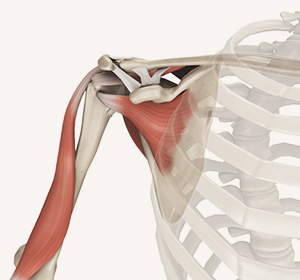
A rotator cuff is a group of 4 muscles in the shoulder joint that include the supraspinatus, infraspinatus, teres minor, and subscapularis. These muscles originate in the scapula and attach to the head of the humerus through tendons. The rotator cuff forms a sleeve around the humeral head and glenoid cavity, providing stability to the shoulder joint while enabling a wide range of movements. Rotator cuff tears can be complete where the tendon separates from the bone.
What are the Symptoms of a Partial Rotator Cuff Tear?
A partial rotator cuff tear is asymptomatic in many people. Some people experience symptoms such as:
- Pain in the shoulder region and upper arm
- Pain while sleeping on your affected arm or lifting heavy objects over the shoulder level
- Stiffening and weakness of the arm can occur
What are the Causes of a Partial Rotator Cuff Tear?
Aging is the most common cause of a partial rotator cuff tear. Other causes can include overhead activities, sports or a fall on an outstretched arm.
How is a Partial Rotator Cuff Tear Diagnosed?
Your doctor will perform specific movements of your shoulder to identify the weakness of the rotator cuff muscles. Diminished strength indicates a tendon tear. X-rays will be ordered to identify any bony abnormalities that might be irritating the rotator cuff. Ultrasound test and MRI confirms the diagnosis.
What is the Treatment for a Partial Rotator Cuff Tear?
Partial rotator cuff tears can be often treated without surgery. Treatment options include:
- Taking prescribed pain medications to manage pain
- Avoiding activities that trigger symptoms
- Physical therapy to regain strength and mobility
- Injection of a steroid (cortisone) and a local anesthetic in the subacromial space of the affected shoulder to relieve inflammation and pain
Damage involving more than 90% of the depth of the tendon may require surgery. Miniature surgical instruments are used to remove the damaged part of the tendon and injured surrounding tissue. The ends of the tendon are then sewn back together.
How is a Partial Rotator Cuff Tear Prevented?
Partial rotator cuff tears can be prevented by:
- Quitting the use of tobacco (smoking) and alcohol
- Performing regular strengthening exercises for your shoulder
- Maintaining good posture while sitting, standing or walking
- Taking breaks while performing repetitive overhead activities
- Switching sides often when carrying a heavy bag
For more information about our services or to schedule an appointment, call us at or click here to request an appointment online. We'll respond to you as soon as possible.
-
Send a Referral
-
Send Medical Records
-
Additional InquiresEmail us at [email protected]