Multidirectional Instability of the Shoulder
Colorado Springs Orthopaedic Group
Your shoulder is one of the body's most mobile joints, allowing you to reach, lift, rotate, and perform countless everyday movements. Because of this mobility, the shoulder can also be susceptible to injuries, overuse, arthritis, and other conditions that cause pain and limit movement.
CSOG provides comprehensive evaluation and treatment for a wide range of shoulder conditions, from sports injuries and tendon problems to arthritis, instability, and fractures. Depending on your condition, treatment may include physical therapy, activity modification, medications, injections, minimally invasive procedures, or surgery.
Our shoulder specialists take the time to understand your symptoms, activity level, and goals so you can receive treatment designed to reduce pain, improve function, and help you get back to the activities that are important to you.
What is Shoulder Instability?
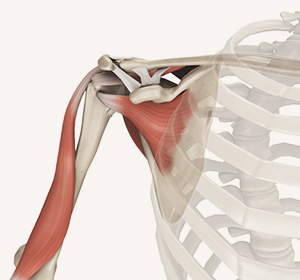
The shoulder consists of a ball and socket joint where the rounded end of the humerus (upper arm bone) fits into a socket (glenoid cavity) formed by the shoulder blade. The joint is stabilized by the surrounding capsule, ligaments, and tendons of the rotator cuff muscles. Shoulder instability results when the humerus is not held firmly within the socket and moves away from the glenoid cavity. This may be due to a defect or injury to the supporting structures and can result in a partial dislocation (subluxation) or total dislocation of the shoulder joint.
What is Multidirectional Instability?
Instability may be described by the direction in which the humerus is subluxated or dislocated from the glenoid. When it occurs in several directions it is referred to as multidirectional instability.
What are the Causes of Multidirectional Instability?
The ligaments in some individuals are naturally loose. As a result, they are at higher risk of developing multidirectional instability. Other causes include:
- Excessive stretching of the shoulder during exercise
- Excessive overhead activities or sports such as volleyball, swimming
- A blow or fall causing injury to the shoulder in which joint laxity is already present
What are the Symptoms of Multidirectional Instability?
You may feel instability or looseness of your shoulder joint. Other symptoms include:
- Vague pain in your shoulder which is aggravated by certain activities or arm positions
- Difficulty performing overhead activities
- Weakness of the arm
How is Multidirectional Instability Diagnosed?
Your doctor will review your medical history and perform a physical examination to assess the instability of your shoulder and identify its cause. Joint laxity and the strength of the rotator cuff muscles are assessed. Multidirectional instability is diagnosed with the help of specific tests. Imaging tests such as an X-ray or an MRI scan help visualize the shoulder joint and its supportive structures.
What is the Treatment for Multidirectional Instability?
To relieve symptoms, your doctor may recommend:
- Using an ice pack
- Taking your pain medication as prescribed
- Resting the arm and avoiding overhead activities or certain sports
If your joint has dislocated, your doctor may perform a specific maneuver to reposition your joint. Your shoulder is then immobilized for 2-3 weeks to prevent a recurrence.
Rehabilitation exercises
Your physical therapist will plan an exercise program which may include:
- Strengthening exercises for the rotator cuff muscles and the muscles that stabilize the shoulder blade
- Exercise to help you return to daily activities and sports
Conservative treatment methods and rehabilitation help most people with multidirectional instability.
Surgery
Surgery is considered if your symptoms persist. It may involve arthroscopy or open surgery.
Arthroscopy involves the insertion of a thin device with a camera to view the shoulder joint on a monitor and perform the necessary surgical procedure. Open surgery involves a larger incision and the procedure is performed under direct visualization. The most common surgery performed for multidirectional instability is a capsular shift where the capsule and ligaments enclosing the shoulder joint are tightened.
How Can Multidirectional Instability Be Prevented?
Multidirectional instability and dislocation may be prevented by following these guidelines:
- Strengthen the supportive muscles of your shoulder with regular exercises
- Receive proper coaching for athletics
- Avoid overuse or overstretching of the shoulder
- Do not continue an exercise or activity if you experience pain and get yourself evaluated if pain persists beyond a few days.
For more information about our services or to schedule an appointment, call us at or click here to request an appointment online. We'll respond to you as soon as possible.
-
Send a Referral
-
Send Medical Records
-
Additional InquiresEmail us at [email protected]