Metatarsophalangeal Joint Fusion
Colorado Springs Orthopaedic Group
Your feet and ankles provide the foundation for movement and are essential for walking, standing, working, exercising, and participating in sports. Injuries and conditions affecting these areas can make even simple daily activities painful or difficult.
CSOG provides specialized care for a broad range of foot and ankle conditions, including fractures, arthritis, tendon and ligament problems, deformities, sports injuries, and other disorders affecting mobility. Our specialists offer both nonsurgical and surgical treatment options based on your individual condition.
Treatment may include physical therapy, activity modification, bracing, injections, minimally invasive procedures, or advanced surgery when appropriate. Our goal is to relieve pain, restore stability and function, and help you get back on your feet and return to the activities you enjoy.
What is Metatarsophalangeal Joint Fusion?
Metatarsophalangeal (MTP) joint fusion is a surgical procedure used to treat severe arthritis, deformities, or instability in the MTP joint, most commonly in the big toe (first MTP joint). The procedure involves permanently joining (fusing) the bones of the joint to eliminate movement, reduce pain, and improve function.
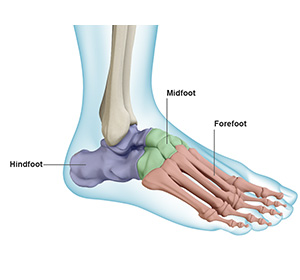
The metatarsophalangeal joint is the connection between the metatarsal bones of the foot and the proximal phalanges of the toes. Each foot has five MTP joints, with the first MTP joint (big toe) being the most important for weight-bearing and movement.
Indications for Metatarsophalangeal Joint Fusion
Metatarsophalangeal joint fusion surgery is typically indicated for the treatment of arthritis of the big toe (hallux rigidus). Arthritis of the big toe is characterized by the gradual loss of cartilage around the joint at the base of the big toe, causing the bone surfaces to become irregular and rub against each other, resulting in significant pain, swelling, stiffness, and reduced joint function.
Other indications for MTP joint fusion include:
- Deformities such as hallux valgus (bunions)
- Chronic joint instability
- Severe joint damage
- Persistent joint pain
- Failed conservative treatments like orthotics, steroid injections, and medications
Procedure for Metatarsophalangeal Joint Fusion
In general, the procedure for metatarsophalangeal joint fusion will involve the following steps:
- The patient is administered either general anesthesia or regional anesthesia (nerve block).
- A small incision is made over the MTP joint, usually on the top of the foot.
- The damaged cartilage is removed from the surfaces of the metatarsal head and the base of the proximal phalanx to create raw bone surfaces for fusion.
- The bones are aligned in a slightly upward (dorsiflexed) position for walking and balance and an inward (valgus) position to mimic the natural toe position.
- The bones are secured using screws, plates, or staples to hold them together until they fuse.
- The incision is closed with sutures, and a bandage is applied.
- A rigid boot or cast is placed to protect the foot.
Postoperative Care and Recovery
Postoperative care for MTP joint fusion focuses on pain management, wound care, and gradual weight-bearing to ensure proper bone healing. Patients are typically non-weight-bearing for 4-6 weeks, using crutches or a walker, followed by partial weight-bearing in a stiff-soled boot for another few weeks. Keeping the foot elevated and applying ice can help reduce swelling. Pain is managed with prescribed medications, and the incision must be kept clean and dry to prevent infection. Around 6-12 weeks post-surgery, X-rays confirm bone fusion, allowing a gradual return to normal footwear and activities. Physical therapy may be recommended to restore strength, balance, and gait mechanics. Full recovery can take 3-6 months, with permanent loss of toe movement but significant pain relief and improved function.
Risks and Complications
Metatarsophalangeal joint fusion is generally a safe procedure, but like any surgery, it carries potential risks and complications, such as:
- Nonunion (failure of bones to fuse)
- Infection
- Hardware irritation
- Altered gait
- Nerve injury
- Blood clots or deep vein thrombosis (DVT)
Benefits
Benefits of metatarsophalangeal joint fusion include:
- Pain relief
- Improved foot stability
- Better walking mechanics
- Long-term correction of deformities
For more information about our services or to schedule an appointment, call us at or click here to request an appointment online. We'll respond to you as soon as possible.
-
Send a Referral
-
Send Medical Records
-
Additional InquiresEmail us at [email protected]