Fifth Metatarsal Fractures
Colorado Springs Orthopaedic Group
Your feet and ankles provide the foundation for movement and are essential for walking, standing, working, exercising, and participating in sports. Injuries and conditions affecting these areas can make even simple daily activities painful or difficult.
CSOG provides specialized care for a broad range of foot and ankle conditions, including fractures, arthritis, tendon and ligament problems, deformities, sports injuries, and other disorders affecting mobility. Our specialists offer both nonsurgical and surgical treatment options based on your individual condition.
Treatment may include physical therapy, activity modification, bracing, injections, minimally invasive procedures, or advanced surgery when appropriate. Our goal is to relieve pain, restore stability and function, and help you get back on your feet and return to the activities you enjoy.
What are Fifth Metatarsal Fractures?
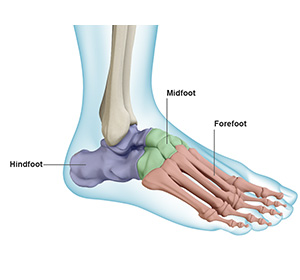
The metatarsal bones are the long bones in your feet. There are five metatarsal bones in each foot. The fifth metatarsal is the long bone that is located on the outside of the foot and connects to the small toe. The fifth metatarsal bone is more commonly fractured.
There are two types of fractures that often occur in the fifth metatarsal, avulsion fracture, and Jones fracture. An avulsion fracture, a piece of the bone is pulled off the main portion of the fifth metatarsal by the tendon that attaches to this region. Jones fracture involves fracture in a small area of the fifth metatarsal that receives limited blood supply. It can either be a stress fracture (a small hairline break that occurs over time) or an acute (sudden) break. These fractures are less common than those of avulsion fractures and may take longer to heal. Other fractures such as mid-shaft fractures and fractures of the metatarsal head and neck may occur in the fifth metatarsal.
Causes
Overuse, repetitive stress and trauma are the most common causes of Jones fractures. Patients who sustain a Jones fracture have pain, swelling, tenderness, and bruising over the outside area of their foot. They may also have difficulty in walking.
Diagnosis
Your doctor will ask you about the symptoms, history of injury, and will examine your foot to determine the location of the pain. X-rays and other additional imaging studies may be needed.
Treatment
Initial treatment consists of rest, ice, compression, and elevation (RICE protocol); all assist in controlling pain and swelling. A cast, cast boot, or stiff-soled shoe may be needed to immobilize your foot. Crutches may be recommended to keep you from putting weight on your leg. Bone stimulation is a technique for accelerating healing by using a pain-free external device. This technique may be used if immobilization does not provide adequate healing.
If the fracture fails to unite, or heal, or if the injury involves a displaced bone or multiple fractures, surgery will likely be recommended.
Surgery may include placing a screw to stabilize the fractured bone, and hold it securely in place while healing occurs and a bone graft may be used to stimulate a healing response. Your doctor will discuss the type of procedure that may be needed for your condition.
For more information about our services or to schedule an appointment, call us at or click here to request an appointment online. We'll respond to you as soon as possible.
-
Send a Referral
-
Send Medical Records
-
Additional InquiresEmail us at [email protected]