Metatarsal and Phalangeal (Forefoot) Fractures
Colorado Springs Orthopaedic Group
Your feet and ankles provide the foundation for movement and are essential for walking, standing, working, exercising, and participating in sports. Injuries and conditions affecting these areas can make even simple daily activities painful or difficult.
CSOG provides specialized care for a broad range of foot and ankle conditions, including fractures, arthritis, tendon and ligament problems, deformities, sports injuries, and other disorders affecting mobility. Our specialists offer both nonsurgical and surgical treatment options based on your individual condition.
Treatment may include physical therapy, activity modification, bracing, injections, minimally invasive procedures, or advanced surgery when appropriate. Our goal is to relieve pain, restore stability and function, and help you get back on your feet and return to the activities you enjoy.
Forefoot Fractures
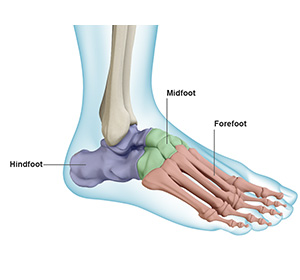
The forefoot is the anterior or front portion of the foot that functions in weight-bearing and maintaining balance while standing, walking or running. It is formed by 5 metatarsal bones, 14 phalange bones, and various soft tissues. A forefoot fracture is a crack or breaks in any of these bones. In some cases, the broken bone can protrude through the skin. These are called open fractures.
Causes
Traumatic fractures occur when there is a direct impact of your foot on a hard surface. Stress fractures are tiny hairline cracks in the bone, most often caused due to repeated stress. Stress fractures are common in dancers, runners, and athletes.
Symptoms
The common symptoms of forefoot fracture include:
- Cracking sound at the time of injury
- Pain
- Bruising
- Swelling
- Tingling sensation
- Blue or gray colored skin
- Inability to walk
- Nail injury
- Deformity (if untreated)
Diagnosis
Your doctor will physically examine the forefoot and assess the injury. An X-ray will be ordered to examine the fracture more closely.
Treatment
The treatment options include:
- Medications: Prescribed pain medications may be given to manage pain.
- Rest: Adequate rest can heal a traumatic fracture.
- Splinting: Splints may be applied to keep the toe in a fixed position.
- Rigid shoe: A stiff-soled shoe may be recommended to protect the toe and position it correctly.
- Buddy-taping: The fractured toe is taped to the adjacent toe with a gauze pad between the toes.
Surgery is recommended if you do not respond to non-surgical treatment options. The surgery is performed under local anesthesia. Your surgeon realigns the fractured bones using pins or screws to hold the bones together in place until they heal completely. Follow-up X-rays may be ordered to monitor complete healing which may take about 6-8 weeks.
For more information about our services or to schedule an appointment, call us at or click here to request an appointment online. We'll respond to you as soon as possible.
-
Send a Referral
-
Send Medical Records
-
Additional InquiresEmail us at [email protected]