Metatarsal Surgery
Colorado Springs Orthopaedic Group
Your feet and ankles provide the foundation for movement and are essential for walking, standing, working, exercising, and participating in sports. Injuries and conditions affecting these areas can make even simple daily activities painful or difficult.
CSOG provides specialized care for a broad range of foot and ankle conditions, including fractures, arthritis, tendon and ligament problems, deformities, sports injuries, and other disorders affecting mobility. Our specialists offer both nonsurgical and surgical treatment options based on your individual condition.
Treatment may include physical therapy, activity modification, bracing, injections, minimally invasive procedures, or advanced surgery when appropriate. Our goal is to relieve pain, restore stability and function, and help you get back on your feet and return to the activities you enjoy.
What is Metatarsal Surgery?
Metatarsal surgery is a surgical procedure performed on the metatarsal bones, the long bones in the feet that connect to the toe bones. It is usually performed to correct a bunion deformity and is mainly done on the first metatarsal bone behind the big toe. Surgery on the second to fifth metatarsal bones is usually performed to treat callouses or ulcers at the bottom of the foot.
Anatomy of Metatarsal Bones
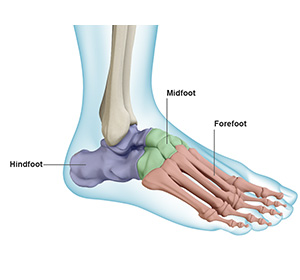
The metatarsal bones are the five long bones present behind each toe in the foot. These bones help in twisting or movement of your foot and to maintain balance while walking. The bone behind the big toe is called the first metatarsal and the bone behind the little toe is called the fifth metatarsal.
Indications of Metatarsal Surgery
Besides correcting a bunion deformity metatarsal surgery may be performed to treat:
- Injury to metatarsal bones (fracture)
- Callouses formed by the abnormal alignment of metatarsal bones which can increase pressure over certain areas
- Ulcers which can form under excessive pressure in diabetic patients
- Rheumatoid arthritis
Preparing for Metatarsal Surgery
Following the instructions provided prior to the surgery helps reduce complications and improves outcomes.
- Discontinue the consumption of anti-inflammatory medicines a week before surgery to prevent excessive bleeding.
- If you have any fever or infection, report it to your surgeon.
- For a better understanding of the procedure, enquire about its risks and benefits from your doctor.
- Quit smoking or alcohol consumption if applicable to reduce the risk of infection and delayed healing.
- Do not eat or drink six hours before surgery.
- Wear loose-fitting shorts or pants for comfort.
Procedure for Metatarsal Surgery
You will be instructed to lie on your back. Anesthesia is administered and a small incision will be made near the targeted metatarsal bone. Through the incision, the metatarsal bone is cut. It is then raised or repositioned to correct alignment and is fixed with a screw or metal pin. In fracture cases, the fractured metatarsal bones are realigned and stabilized with screws. The incision is then closed with stitches. In some cases, the callous at the bottom of the foot is also cut off. Your surgeon will then place a bandage on your foot. A cast or special shoe is also worn for protection.
Post-operative Care for Metatarsal Surgery
You will be provided with crutches to avoid applying pressure to the foot. Pain medications will be provided. You are advised to keep the stitches and incisions clean and dry to prevent infection. You should rest for a minimum of 1 week, keeping the foot raised above heart level as much as possible.
Risks and Complications of Metatarsal Surgery
Risks and complications associated with metatarsal surgery include:
- Infection at the incision or in the bone
- Failure in the healing of the bone
- Fractures in nearby metatarsal bones due to stress
- Development of new callouses
- Swelling of the foot
For more information about our services or to schedule an appointment, call us at or click here to request an appointment online. We'll respond to you as soon as possible.
-
Send a Referral
-
Send Medical Records
-
Additional InquiresEmail us at [email protected]