Foot Extensor Tendonitis
Colorado Springs Orthopaedic Group
Your feet and ankles provide the foundation for movement and are essential for walking, standing, working, exercising, and participating in sports. Injuries and conditions affecting these areas can make even simple daily activities painful or difficult.
CSOG provides specialized care for a broad range of foot and ankle conditions, including fractures, arthritis, tendon and ligament problems, deformities, sports injuries, and other disorders affecting mobility. Our specialists offer both nonsurgical and surgical treatment options based on your individual condition.
Treatment may include physical therapy, activity modification, bracing, injections, minimally invasive procedures, or advanced surgery when appropriate. Our goal is to relieve pain, restore stability and function, and help you get back on your feet and return to the activities you enjoy.
What is Foot Extensor Tendonitis?
Foot extensor tendonitis is a type of inflammation that affects the tendons in the front part of your feet. Extensor tendons help you lift your toes and bring the front of your foot up. Foot extensor tendonitis can occur due to repetitive motions of the foot or overloading your tendons with heavy weight.
Anatomy of Foot Extensor Tendons
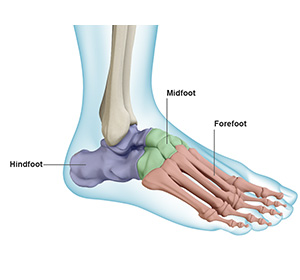
Tendons are tough, fibrous tissues in the human body that connect muscles to bones. The extensor tendons join the muscles on the front of the lower leg to the toes. These foot tendons run down across the front of the ankle, across the top of the foot and then spread out attaching to the tips of the toes. The foot extensor tendons sit between the skin and the bones with minimal padding around them, making them prone to injury.
The two main foot extensor tendons are:
- Extensor Hallucis Longus: These tendons lift up the big toe
- Extensor Digitorum: These tendons lift the other four toes
Causes of Foot Extensor Tendonitis
Foot extensor tendonitis can be caused by anything that makes you use your feet in a repetitive motion. Some of the common activities that can lead to extensor tendinitis include:
- Activities that require standing for a long time
- Sports injuries
- Wearing shoes that fit poorly or are too tight
- Sudden foot twisting or slipping injuries
Risk factors of Foot Extensor Tendonitis
The common risk factors for foot extensor tendonitis include the following conditions:
- Autoimmune diseases such as rheumatoid arthritis
- Osteoarthritis
- Gout
- People with foot deformities such as flat feet or high arches
- People older than 40
- Smoking, alcohol consumption and tobacco chewing
Symptoms of Foot Extensor Tendonitis
Symptoms of foot extensor tendonitis include:
- Intense pain radiating along the length of a tendon or its surrounding area
- Pain that worsens when you use your foot
- Stiffness or numbing sensation
- Swelling
- Discoloration of the skin over the affected foot
- The skin over the foot feels warm or cold to touch around the affected tendon
Diagnosis of Foot Extensor Tendonitis
Your healthcare provider may look at your foot to check for areas of swelling and tenderness and you may be asked to perform certain foot and leg movements to assess your range of motion, strength, and the severity of your pain.
You might also need imaging tests if your provider suspects that your tendon is torn or to assess for any other damage inside your foot. The most common tests include:
- X-rays
- Musculoskeletal Ultrasound (MSK-US)
- CT (computed tomography) scan
- Magnetic resonance imaging (MRI)
Treatment of Foot Extensor Tendonitis
Generally, it can take anywhere from a few weeks to a few months for your tendons to return to normal. Foot extensor tendinitis management usually involves the following treatment options which includes:
- Rest: Avoid the activities that irritates your tendons.
- Ice: Apply a cold compress on your foot for 15 minutes at a time, four times a day.
- Compression: Wrap the painful area in an elastic bandage to help reduce swelling.
- Elevation: Prop up your foot above the level of your heart when sitting.
- NSAIDs can reduce pain and inflammation.
- Corticosteroid injections can also severe reduce inflammation and pain.
- Physical therapy including range-of-motion exercises and stretches can relieve your symptoms and strengthen the area around your irritated tendons.
- In an extremely painful or complicated case, surgery may be the best option to treat extensor tendonitis.
Prevention of Foot Extensor Tendonitis
Some of the preventive measures to be followed during sports or other physical activities to avoid foot extensor tendonitis include:
- Wearing appropriate protective equipment.
- Resting your affected foot if it hurts from physical activity or an injury.
- Stretching and warming up before playing sports or working out.
- Cooling down and stretching after sports or physical activity.
For more information about our services or to schedule an appointment, call us at or click here to request an appointment online. We'll respond to you as soon as possible.
-
Send a Referral
-
Send Medical Records
-
Additional InquiresEmail us at [email protected]