Hammertoe Surgery
Colorado Springs Orthopaedic Group
Your feet and ankles provide the foundation for movement and are essential for walking, standing, working, exercising, and participating in sports. Injuries and conditions affecting these areas can make even simple daily activities painful or difficult.
CSOG provides specialized care for a broad range of foot and ankle conditions, including fractures, arthritis, tendon and ligament problems, deformities, sports injuries, and other disorders affecting mobility. Our specialists offer both nonsurgical and surgical treatment options based on your individual condition.
Treatment may include physical therapy, activity modification, bracing, injections, minimally invasive procedures, or advanced surgery when appropriate. Our goal is to relieve pain, restore stability and function, and help you get back on your feet and return to the activities you enjoy.
What is Hammertoe Surgery?
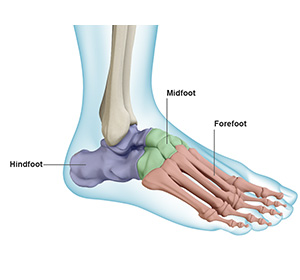
Hammertoe is a foot deformity in which one or more toes bend downward at the middle joint, often due to muscle imbalance, tight shoes, arthritis, or genetics. It can cause pain, corns, calluses, and difficulty walking. Hammertoe surgery is a procedure to correct this deformity and restore normal toe function.
Indications for Hammertoe Surgery
Hammertoe surgery is typically recommended when non-surgical treatments, such as orthotics, splints, and physical therapy, fail to relieve pain or restore toe function.
Procedure for Hammertoe Surgery
Hammer toe surgery is typically performed using local anesthesia with sedation or general anesthesia. The type of surgery depends on the severity and flexibility of the hammertoe:
- Tendon Transfer for Hammertoe (Mild Cases): Tendon transfer is a surgical procedure used for flexible hammertoes. It involves rerouting a tendon from the bottom of the toe to the top, helping to straighten the bent joint. This technique restores balance by pulling the toe into a normal position. The procedure is minimally invasive, with a faster recovery time compared to bone surgery. It is ideal for patients with mild deformities without joint stiffness.
- Joint Resection (Arthroplasty) for Moderate Hammertoe: In this procedure, a portion of the affected joint (usually the head of the proximal phalanx) is removed to allow the toe to straighten. The surgeon then realigns the toe and secures it with stitches or a temporary pin. This technique is effective for moderately rigid hammertoes, reducing pain and improving toe flexibility.
- Joint Fusion (Arthrodesis) for Severe Hammertoe: Arthrodesis is a procedure where the damaged joint cartilage is removed, and the bones are permanently fused using a pin, screw, or implant. This eliminates movement in the joint, keeping the toe straight and preventing recurrence. It is recommended for severe or rigid hammertoes that do not respond to other treatments.
Once the surgery is complete, the incision is closed with stitches or sutures. A special surgical shoe or splint is applied to protect the foot. The foot is bandaged, and pins (if used) may remain for 4-6 weeks.
Postoperative Care and Recovery
Postoperative care and recovery for hammertoe surgery involve pain management, wound care, and gradual rehabilitation. In the first one to two weeks, keeping the foot elevated, applying ice, and taking prescribed pain relievers help reduce swelling and discomfort. Bandages must be kept clean and dry, and if pins or sutures are used, they are typically removed within a few weeks. Patients are advised to limit weight-bearing, often using a surgical shoe, crutches, or a walker if necessary. By weeks two to six, mild physical therapy or toe exercises may be introduced to restore mobility and prevent stiffness. Most patients can transition to comfortable footwear by six to eight weeks, although full recovery can take up to three to six months. Avoiding tight shoes and high-impact activities ensures long-term success.
Risks and Complications
While hammertoe surgery is generally safe, as with any surgery, potential risks and complications may occur, such as:
- Infection
- Pain, swelling, or stiffness
- Nerve damage
- Delayed healing
- Loss of toe flexibility
- Implant or hardware issues
- Recurrence of deformity
- Blood clots (deep vein thrombosis - DVT)
For more information about our services or to schedule an appointment, call us at or click here to request an appointment online. We'll respond to you as soon as possible.
-
Send a Referral
-
Send Medical Records
-
Additional InquiresEmail us at [email protected]