Ankle Dislocation
Colorado Springs Orthopaedic Group
Your feet and ankles provide the foundation for movement and are essential for walking, standing, working, exercising, and participating in sports. Injuries and conditions affecting these areas can make even simple daily activities painful or difficult.
CSOG provides specialized care for a broad range of foot and ankle conditions, including fractures, arthritis, tendon and ligament problems, deformities, sports injuries, and other disorders affecting mobility. Our specialists offer both nonsurgical and surgical treatment options based on your individual condition.
Treatment may include physical therapy, activity modification, bracing, injections, minimally invasive procedures, or advanced surgery when appropriate. Our goal is to relieve pain, restore stability and function, and help you get back on your feet and return to the activities you enjoy.
What is Ankle Dislocation?
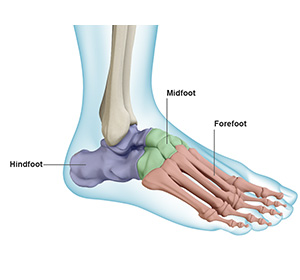
Ankle dislocation is a condition that occurs when the bones of the lower leg called the fibula and tibia get separated from the talus or ankle bone. This can cause serious damage to the nerves and ligaments surrounding the ankle, leading to a decline in strength and overall health of the leg.
Causes of Ankle Dislocation
Some of the common causes of ankle dislocation include:
- Motor vehicle accidents
- Sports injury
- Inward or outward rolling of the ankle
- Severe falls
- Sprain
- Direct fall on the foot
Symptoms of Ankle Dislocation
The signs and symptoms of ankle dislocation include:
- Severe pain
- Instability
- Ankle swelling and bruising
- Stiffness and weakness
- Limitations in the movement of the ankle
Diagnosis
Your doctor will review your symptoms and medical history and perform a thorough physical examination to check for a range of motion and any damage to the ligaments, blood flow, and stability. The following diagnostic tests may be performed for further evaluation of the injured ankle.
- X-rays: During this study, high electromagnetic energy beams are used to produce images of the bones.
- CT scan: Special x-rays are used to produce images of any damage in the ankle.
Treatment for Ankle Dislocation
You will be instructed to apply an ice pack and keep your ankle in an elevated position to reduce swelling. Depending on your condition, your doctor will place the affected leg in a therapeutic brace to keep it stable and may prescribe medications to reduce pain and swelling. You may need surgery to repair any damaged ligaments, blood vessels, nerves, or any adjacent structures of the ankle.
For more information about our services or to schedule an appointment, call us at or click here to request an appointment online. We'll respond to you as soon as possible.
-
Send a Referral
-
Send Medical Records
-
Additional InquiresEmail us at [email protected]