Thoracic Spine Fusion
Colorado Springs Orthopaedic Group
Spinal conditions can affect your neck, back, movement, and overall quality of life. Pain, stiffness, numbness, or weakness can make it difficult to work, exercise, sleep, or perform everyday activities.
CSOG provides comprehensive care for a wide range of conditions affecting the cervical, thoracic, and lumbar spine. Our specialists use a conservative-first approach whenever appropriate, with treatment options that may include physical therapy, medications, injections, and other nonsurgical treatments. When surgery is necessary, advanced surgical techniques may provide another option.
Your care begins with a thorough evaluation to understand the source of your symptoms and how they are affecting you. We then develop a treatment plan based on your condition, goals, and individual needs.
What is Thoracic Spine Fusion?
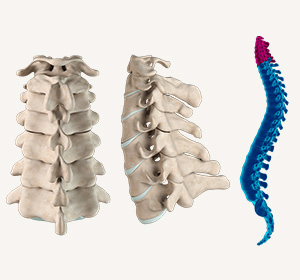
Thoracic spine fusion is a surgical procedure in which two or more bones (vertebrae) of the thoracic spine are joined together so as to eliminate the movement between them. The thoracic spine is the center part of the spine and is formed of 12 vertebrae. Thoracic spine fusion is done by placing bone grafts or bone graft substitutes in between the affected vertebrae. This promotes bone growth and eventually fuses the vertebrae into a single, solid bone.
Indication
Spinal fusion surgery is recommended in certain conditions that cause persistent back pain even after conservative treatment. The surgery is indicated in the following conditions:
- Injury or fracture of the vertebra
- Instability of the spine caused by infections or tumors
- Spondylolisthesis
- Abnormal spinal curvature (kyphosis)
- Degenerative disc disease
- Spinal stenosis (combined with foraminotomy or laminotomy)
Procedure
To perform a spinal fusion the spine may be approached and graft can be placed either from the posterior approach (back), anterior approach (front), or a combination of both (anterior and posterior). Thoracic fusion is usually performed by a posterior approach. The aim of the surgery is to fuse the two vertebrae into a single solid bone.
Posterior approach: The approach is made through the back while the patient lies on his or her stomach. The incision is made down the middle of the back.
Bone Grafting
Usually, small pieces of bone graft material are filled into the space between the vertebrae to promote bony fusion. A bone graft stimulates bone healing by increasing bone production.
Bone grafts can be taken from the patient’s own hip bone. This is called autograft. It can also be obtained from a donor (allograft). Several artificial bone grafts such as demineralized bone matrices (DBMs), bone morphogenetic proteins (BMPs), and ceramics may also be used.
Immobilization of the vertebrae after the surgery helps in the fusion process. Your surgeon may suggest a brace to be worn or internal fixation with plates, screws, and rods may be done to hold the spine still.
Risks and Complications
It is important to be aware of the potential risks and complications before undergoing the surgery. As with any surgery, there are some possible complications after thoracic spinal surgery which include:
- Infection: Antibiotics will be prescribed before, during, and often after the surgery to decrease the risk of infections.
- Bleeding at the site of surgery
- Persistent pain at the bone graft site
- Pseudarthrosis: This is a condition in which there is not enough amount of bone formed and this is more likely in patients who smoke
- Nerve damage
- Formation of blood clots in the legs
Postoperative Care
The recovery period for spinal fusion varies among individuals and also depends on the procedure. You may need to stay in the hospital for 3 to 4 days after surgery. You will be given pain medicines in the hospital and will be taught about the right way of mobilization, and postures while sitting, standing, and walking. You may have to wear a brace or a cast when you leave the hospital.
You can resume normal daily activities only after 2-3 weeks of rest period during which the spine heals. Follow your doctor’s instructions and maintain a healthy lifestyle to achieve better outcomes.
For more information about our services or to schedule an appointment, call us at or click here to request an appointment online. We'll respond to you as soon as possible.
-
Send a Referral
-
Send Medical Records
-
Additional InquiresEmail us at [email protected]