Lumbar Corpectomy and Fusion
Colorado Springs Orthopaedic Group
Spinal conditions can affect your neck, back, movement, and overall quality of life. Pain, stiffness, numbness, or weakness can make it difficult to work, exercise, sleep, or perform everyday activities.
CSOG provides comprehensive care for a wide range of conditions affecting the cervical, thoracic, and lumbar spine. Our specialists use a conservative-first approach whenever appropriate, with treatment options that may include physical therapy, medications, injections, and other nonsurgical treatments. When surgery is necessary, advanced surgical techniques may provide another option.
Your care begins with a thorough evaluation to understand the source of your symptoms and how they are affecting you. We then develop a treatment plan based on your condition, goals, and individual needs.
What is Lumbar Corpectomy and Fusion?
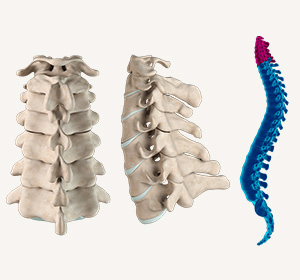
Lumbar corpectomy and fusion is a surgical technique performed to remove the vertebral bone or disc material between the vertebrae to alleviate pressure on the spinal cord and spinal nerves (decompression) in the lumbar (lower back) region.
The term corpectomy originates from the Latin word ‘corpus’ which means ‘body’ and the word ‘ectomy’ means ‘removal’. Spinal fusion is essential for spinal stability after the removal of vertebral bone and disc material to relieve the compression over the neural structure.
Indications of Lumbar Corpectomy and Fusion
Lumbar corpectomy and fusion are recommended when non-surgical treatment options fail to reduce the symptoms.
Nerve compression in the lower back usually leads to back pain, numbness or weakness extending into the hips, buttocks, and legs. Common causes of spinal nerve compression include:
- Degenerative spinal conditions such as herniated discs
- Spinal fractures
- Tumors
- Infection
Before recommending surgery, your surgeon considers various factors such as your age, condition to be treated, health, lifestyle, and activity level.
Lumbar Corpectomy and Fusion Procedure
Your surgeon makes an incision on the side of your abdomen and retracts the soft tissues such as muscles to gain visibility to the spine. A portion of the vertebral body and the intervertebral disc is removed to access the involved neural structure. The source of compression is removed, and the compressed nerves released. To fuse the two adjacent vertebrae, bone graft or bone graft substitute is inserted between the vertebrae at the decompression site to promote healing and to preserve the normal disc height. Implant material such as rods, plates, and screws are fixed to the treated vertebra(e) to deliver additional support and stability during the fusion and healing process. Your surgeon then realigns the soft tissues and closes the incision.
Recovery following Lumbar Corpectomy and Fusion
Following a lumbar corpectomy and fusion, you may observe an immediate improvement in some or all symptoms or sometimes a gradual improvement in the symptoms.
The duration of hospitalization depends on the treatment rendered. At the end of the first day of the surgery, you can move and walk around the hospital. Returning to your daily life or work depends on how well you are healing, and the type of work and activity level. Follow your spinal surgeon’s instructions regarding the proper recovery program and instructions to augment the healing process for a successful recovery.
Risks and Complications of Lumbar Corpectomy and Fusion
As with all surgical procedures, lumbar corpectomy and fusion may be associated with certain risks and complications such as infection, nerve damage, blood clots or blood loss or bowel and bladder problems, and any problem associated with anesthesia. The underlying risk of spinal fusion surgery is a failure in the fusion of vertebral bone and bone graft which usually requires additional surgery.
For more information about our services or to schedule an appointment, call us at or click here to request an appointment online. We'll respond to you as soon as possible.
-
Send a Referral
-
Send Medical Records
-
Additional InquiresEmail us at [email protected]