Neck Strains & Sprains
Colorado Springs Orthopaedic Group
Spinal conditions can affect your neck, back, movement, and overall quality of life. Pain, stiffness, numbness, or weakness can make it difficult to work, exercise, sleep, or perform everyday activities.
CSOG provides comprehensive care for a wide range of conditions affecting the cervical, thoracic, and lumbar spine. Our specialists use a conservative-first approach whenever appropriate, with treatment options that may include physical therapy, medications, injections, and other nonsurgical treatments. When surgery is necessary, advanced surgical techniques may provide another option.
Your care begins with a thorough evaluation to understand the source of your symptoms and how they are affecting you. We then develop a treatment plan based on your condition, goals, and individual needs.
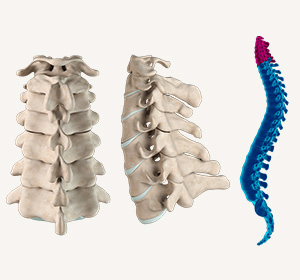
The neck is the most flexible part of the spine and supports the weight of the head. The unique anatomical structure of the cervical vertebrae allows the free movement of the head. The neck is also composed of muscles and ligaments. Any excessive stress on the ligaments and muscles may injure or damage them.
A sprain is a ligament injury caused by overstretching the ligament beyond its optimal capacity. It may even result in a ligament tear.
A strain refers to damage to the muscle or its tendon when it is stretched beyond its capacity. In severe cases, it may even result in a muscle tear.
Some of the most common activities and movements that may cause stress on the soft tissues of the neck include lack of adequate warm-up exercises prior to sports, a fall, awkward position of the neck during sleeping, poor posture, and spearing in football. Motor vehicle accidents usually result in severe sprains and strains called whiplash injuries due to sudden unexpected movement of the neck.
Symptoms of Neck Strains and Sprains
A sprain or strain may result in neck pain, which may develop immediately after the injury or may present after a few hours or even days after the injury. The pain is usually intense and pounding in nature with a sudden onset. The pain may also radiate to the shoulder, upper back, or arms. It may also be associated with muscle spasms. The affected region may be tender to the touch with localized swelling and stiffness. Even slight movement of the neck can aggravate the pain. In rare cases, it may also result in loss of bowel or bladder function which is a medical emergency.
Whiplash injuries are more severe neck injuries. They usually result in headaches, dizziness, jaw pain, and a ringing sensation in the ears.
Diagnosis
An accurate diagnosis is crucial for effective treatment of this condition. To arrive at an accurate diagnosis the doctor will inquire about your symptoms, time of their appearance, and a history of any treatments employed previously. A medical history, a physical and neurological examination are also essential for diagnosis.
Neurological examination is conducted to identify any signs of neurological injury and involves the evaluation of reflexes and muscle weakness. To confirm the diagnosis and to rule out other causes with similar symptoms an X-ray or a CT scan may also be performed. Sometimes, electromyography may also be ordered if an underlying muscle abnormality is suspected.
Treatments
Although the pain is excruciating, in a majority of cases non-operative therapies are sufficient. Some of the non-operative therapies include rest, activity modification, medications such as muscle relaxant, and intermittent application of ice pack followed by moist heat application. A neck collar may also be recommended for a few weeks to support the neck as well as to prevent any neck movement in order to potentiate healing. Non-steroidal anti-inflammatory drugs or NSAID’s may also be prescribed to reduce the pain and swelling. Physical therapy, chiropractic, or acupuncture may also be effective in some cases.
For more information about our services or to schedule an appointment, call us at or click here to request an appointment online. We'll respond to you as soon as possible.
-
Send a Referral
-
Send Medical Records
-
Additional InquiresEmail us at [email protected]