Lumbar Radiculopathy
Colorado Springs Orthopaedic Group
Spinal conditions can affect your neck, back, movement, and overall quality of life. Pain, stiffness, numbness, or weakness can make it difficult to work, exercise, sleep, or perform everyday activities.
CSOG provides comprehensive care for a wide range of conditions affecting the cervical, thoracic, and lumbar spine. Our specialists use a conservative-first approach whenever appropriate, with treatment options that may include physical therapy, medications, injections, and other nonsurgical treatments. When surgery is necessary, advanced surgical techniques may provide another option.
Your care begins with a thorough evaluation to understand the source of your symptoms and how they are affecting you. We then develop a treatment plan based on your condition, goals, and individual needs.
Anatomy of Lumbar Spine
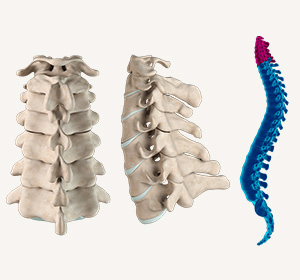
The spine consists of 33 vertebral bones stacked one on top of the other with cushioning discs lying between each vertebra. The lumbar region of the spine (below the rib cage) consists of 5 vertebrae. Nerves of the spinal cord in this region communicate with the lower body through spaces between the vertebrae.
What is Lumbar Radiculopathy?
Back pain is a common condition affecting approximately 80% of the population at some point in their lives. The area usually affected is the lower back (lumbar region) as it bears most of the upper body’s weight. Trauma to the spine, age and overuse can result in deterioration of the vertebral bones and joints or bulging of the discs. The resultant loss of space can lead to compression of the spinal nerve roots. Depending on the area being supplied by the nerve, symptoms are experienced in the lower extremities. Pain in the lower back may sometimes radiate to the legs. This is referred to as lumbar radiculopathy or sciatica.
Impact of Lumbar Radiculopathy
Lumbar radiculopathy can be extremely debilitating and interfere with your daily activities.
Symptoms of Lumbar Radiculopathy
The common symptoms include a sharp or burning pain that travels down one leg. Other symptoms include numbness, tingling and muscle weakness. Occasionally, leg pain occurs without back pain.
Diagnosis of Lumbar Radiculopathy
A thorough evaluation is necessary to identify your spine as the actual source of your pain. Your symptoms and history are reviewed and a detailed physical examination is performed. If the pain originates in the spine, it usually follows a specific pattern of distribution that your doctor identifies and correlates with a spinal level or nerve root. Imaging studies are performed to confirm the diagnosis.
Treatment of Lumbar Radiculopathy
Most cases of lumbar radiculopathy are transient and can be treated by conservative methods such as rest, activity limitation, anti-inflammatory medications, spinal manipulation, spinal injections, physical therapy, specific home exercises, and other modalities. If symptoms are severe or persistent surgery may be recommended.
For more information about our services or to schedule an appointment, call us at or click here to request an appointment online. We'll respond to you as soon as possible.
-
Send a Referral
-
Send Medical Records
-
Additional InquiresEmail us at [email protected]