Surgical Treatment for Spine Conditions
Colorado Springs Orthopaedic Group
Spinal conditions can affect your neck, back, movement, and overall quality of life. Pain, stiffness, numbness, or weakness can make it difficult to work, exercise, sleep, or perform everyday activities.
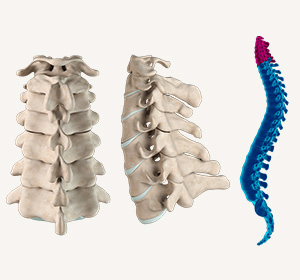
CSOG provides comprehensive care for a wide range of conditions affecting the cervical, thoracic, and lumbar spine. Our specialists use a conservative-first approach whenever appropriate, with treatment options that may include physical therapy, medications, injections, and other nonsurgical treatments. When surgery is necessary, advanced surgical techniques may provide another option.
Your care begins with a thorough evaluation to understand the source of your symptoms and how they are affecting you. We then develop a treatment plan based on your condition, goals, and individual needs.
Surgical treatment is the last resort for chronic backache when other therapies do not relieve the pain. Some surgical procedures can be performed as an out-patient procedure while others may require hospital admission. Surgical treatment is considered when there is damage to the peripheral nerves and the patient is suffering from a progressive neurologic disease.
What are the different types of surgical treatments?
Discectomy: It is a surgical procedure for the removal of the fragment of a slipped disc. A slipped disc is also known as a bulging disc or herniated disc. A slipped disc occurs when the inner core of the spinal disc bulges out through the outer layer of the disc. This fragment may press the spinal cord and the nerves that surround the spinal cord. This pressure causes the symptoms of a slipped disc. Here the surgeon uses the small incision to look at the actual herniated disc, to remove the disc and relieve the pressure on the nerve. It is also called as open discectomy.
Foraminotomy: This is a surgery done to enlarge the foramen (bony hole through which a nerve root comes out from the spinal column). Bulging discs or thickening of the joints with age can cause the narrowing of the foramen. This may lead to pressure on the nerve causing pain, numbness in the arms and legs.
IntraDiscal Electrothermal Therapy: Intradiscal electrothermal therapy (IDET) technique uses thermal energy to relieve pain from a cracked or bulging disc. A special needle is inserted into the disc with the help of a catheter and then heated to a high temperature for 20 minutes. The heat will thicken the disc wall and thus seal it to reduce the bulging and irritation of the nerves.
Nucleoplasty: In this technique, radiofrequency energy is used to treat low back pain which results from herniated discs. A wand-like instrument is inserted through a needle into the disc under X-ray guidance, to create an opening. The material from the disc is removed through this channel. Then the wand is heated in order to shrink the inner tissue and seal the disc wall.
Radiofrequency lesioning: This procedure uses electrical impulses to block the conduction of pain signals for about 6-12 months. A special needle is inserted into the affected nerve tissue under the X-ray guidance. The needle tip is heated for 90-120 seconds in order to destroy the nerves.
Spinal fusion: Spinal fusion procedure is done for the treatment of upper and lower spine problems. The damaged spinal disc present in between two or more vertebrae is removed and the adjacent vertebrae are joined with the help of bone grafts and/or metal devices.
It is mostly done in the lower back (lumbar region) joining two or more spinal bones to avoid the motion between them. This prevents the stretching of nerves and surrounding ligaments and muscles.
Anterior spinal fusion is a procedure where the surgeon makes an incision on the patient’s front part of the body whereas posterior spinal fusion is a procedure where the incision is made on the patient’s back exposing the spine.
Spinal Laminectomy: Laminectomy is a surgical procedure to remove the portion of the lamina (roof) of the spinal bone to increase the size of the spinal column. It helps to relieve the pain caused by the pressure on the spinal cord and nerves as a result of the narrowing of the spinal column. The procedure removes bones and damaged discs and makes space for spinal nerves and columns. Spinal laminectomy is performed as an open surgery or by a minimally invasive approach. In an open procedure, the incision made is large and the overlying muscles must be cut. In a minimally invasive technique, very tiny incisions are made, the back muscles are moved aside and the lamina is removed
For more information about our services or to schedule an appointment, call us at or click here to request an appointment online. We'll respond to you as soon as possible.
-
Send a Referral
-
Send Medical Records
-
Additional InquiresEmail us at [email protected]