Compression of Thoracic Nerve
Colorado Springs Orthopaedic Group
Spinal conditions can affect your neck, back, movement, and overall quality of life. Pain, stiffness, numbness, or weakness can make it difficult to work, exercise, sleep, or perform everyday activities.
CSOG provides comprehensive care for a wide range of conditions affecting the cervical, thoracic, and lumbar spine. Our specialists use a conservative-first approach whenever appropriate, with treatment options that may include physical therapy, medications, injections, and other nonsurgical treatments. When surgery is necessary, advanced surgical techniques may provide another option.
Your care begins with a thorough evaluation to understand the source of your symptoms and how they are affecting you. We then develop a treatment plan based on your condition, goals, and individual needs.
What is Thoracic Nerve Compression?
Nerves can undergo compression or become pinched by surrounding structures as they emerge from the spine, a condition called radiculopathy. Nerve compression mostly occurs in the neck or lower back regions which have more mobility, but it can sometimes involve the upper back or thoracic region. Thoracic nerve compression may be associated with numbness, tingling sensation and pain around the chest and upper back. Leg weakness may also be present.
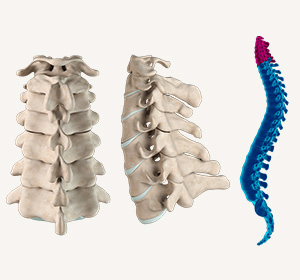
The thoracic spine consists of 12 vertebrae separated by intervertebral discs. It is situated between the cervical spine (neck) and the lumbar spine (lower back). It surrounds and protects the spinal cord and provides stability to the body. The thoracic spine serves as an attachment for the ribs and many muscles and supports respiration. Some important movements such as side bending, rotation, and flexion are enabled by the movement of the thoracic spine.
Causes of Thoracic Nerve Compression
Thoracic nerve compression may be caused by trauma or degenerative disease. This can damage the outer layer of the intervertebral disc causing the inner soft tissue to bulge out and impinge on the nerves or spinal cord. Bone spurs may develop when there is severe degeneration. These bony overgrowths can also cause nerve compression.
Diagnosis of Thoracic Nerve Compression
Your doctor will perform a physical examination evaluating your movements, reflexes, and strength. An X-ray, CT-scan or MRI may be ordered to view the area of nerve compression.
Treatment of Thoracic Nerve Compression
Thoracic nerve compression usually responds well to non-surgical treatments such as rest, pain medications and physical therapy. If these treatments do not alleviate your symptoms, your doctor may advise surgery. Surgery will depend on the cause of the compression. It may involve the removal of the damaged vertebral bone (laminectomy) to decompress the nerves or spinal cord. Following removal of the bone, a fusion of the adjacent vertebral segments may be necessary. This is performed with the help of bone graft and implanted devices such as a cage, rods, screws, and plates.
For more information about our services or to schedule an appointment, call us at or click here to request an appointment online. We'll respond to you as soon as possible.
-
Send a Referral
-
Send Medical Records
-
Additional InquiresEmail us at [email protected]