Spine Deformities
Colorado Springs Orthopaedic Group
Spinal conditions can affect your neck, back, movement, and overall quality of life. Pain, stiffness, numbness, or weakness can make it difficult to work, exercise, sleep, or perform everyday activities.
CSOG provides comprehensive care for a wide range of conditions affecting the cervical, thoracic, and lumbar spine. Our specialists use a conservative-first approach whenever appropriate, with treatment options that may include physical therapy, medications, injections, and other nonsurgical treatments. When surgery is necessary, advanced surgical techniques may provide another option.
Your care begins with a thorough evaluation to understand the source of your symptoms and how they are affecting you. We then develop a treatment plan based on your condition, goals, and individual needs.
Spine Anatomy
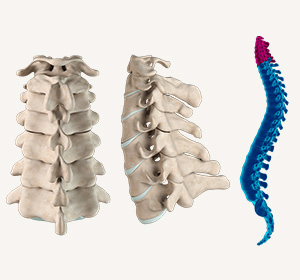
The spine or backbone provides stability to the upper part of our body. It helps to hold the body upright. It consists of a series of irregularly-shaped bones appearing in a straight line. The spine has two gentle curves, when viewed from the side and appears to be straight when viewed from the front. When these curves are exaggerated, pronounced problems can occur such as back pain, breathing difficulties and fatigue.
Causes of Spine Deformities
The conditions causing these symptoms include:
- Scoliosis: It is a condition where the spine or backbone is curved sideways instead of appearing in a straight line. It curves like an “S” or “C” shape. Larger curves cause discomfort while the small curves do not cause any problems.
- The treatment for scoliosis is based on the assessment of the curve, cause, and your age. Mild scoliosis (less than 25°) may not require treatment and will be observed by your physician every 4 to 6 months for any progression in the curve. Bracing may be needed if the curve is more than 30° to help to slow the progression of scoliosis. Surgery is an option for severe scoliosis (curve >40°) to stop the curve from getting worse. The most common surgical procedure is correction, stabilization, and fusion of the curve.
- Lordosis: Lordosis is a condition characterized by the abnormal excessive curvature of the spine, sometimes called swayback.
- The treatment for lordosis depends on the severity of the condition, age and any neurological defects if present. In cases of mild lordosis, no treatment may be initiated and your physician may recommend a ‘wait-and-watch’ approach and observes the curve every 4 to 6 months. If any progression is observed in the curve, treatment may be initiated. Physical therapy (exercise program) may be recommended to increase the range of motion, flexibility, and strength. Analgesics and anti-inflammatory medications may be prescribed to relieve pain and inflammation. Bracing may be necessary to prevent the curve from worsening. Surgery may be indicated for severe lordosis with neurological involvement.
- Kyphosis: Kyphosis is characterized by an abnormal curvature of the spine in the thoracic region that results in a round-back appearance.
- The treatment depends on the cause of the condition and may include bracing, physical therapy, medications, and surgery. Bracing may be necessary to prevent the curve from worsening if the cause of kyphosis is Scheuermann’s disease. Physical therapy (exercise program) may be recommended to increase your range of motion, flexibility, and strength. If caused due to osteoporosis, medications may be prescribed to prevent future compression fractures. Surgery may be recommended if kyphosis is debilitating and painful, and does not respond to conservative treatment methods.
For more information about our services or to schedule an appointment, call us at or click here to request an appointment online. We'll respond to you as soon as possible.
-
Send a Referral
-
Send Medical Records
-
Additional InquiresEmail us at [email protected]