

Tennis Elbow
Colorado Springs Orthopaedic Group
Your elbow connects the upper and lower arm and plays an important role in lifting, reaching, gripping, and other everyday movements. Elbow injuries and conditions can result from sports, repetitive use, trauma, arthritis, or problems affecting the tendons, nerves, and surrounding tissues.
At CSOG, our specialists provide comprehensive care for a wide range of elbow conditions, including tendon injuries, nerve compression, instability, arthritis, fractures, and sports-related injuries. Treatment is based on your diagnosis and may range from conservative care and physical therapy to injections, minimally invasive procedures, and surgery.
Our goal is to identify the source of your elbow problem and provide an individualized treatment approach that helps relieve pain, restore movement and strength, and return you to your normal activities.
What is Elbow Anatomy?
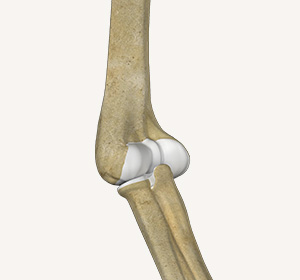
The elbow is a joint made up of three bones: the upper arm bone, the humerus, and the two forearm bones, the radius and ulna. The lower end of the humerus has bony bumps called epicondyles that serve as sites of attachment for major tendons and muscles that help in arm movement. The bump on the outside of the elbow is called the lateral epicondyle. It helps in the attachment of the tendons and muscles that help extend your fingers and wrist.
What is Tennis Elbow?
Tennis elbow is a common name for the elbow condition lateral epicondylitis. It is an overuse injury that causes inflammation and microtears of the tendons that attach to the lateral epicondyle.
Tennis elbow is a painful condition occurring from repeated muscle contractions at the forearm. The condition is more common in sports activities such as tennis, painting, hammering, typing, gardening and playing musical instruments.
Tennis elbow and golfer’s elbow are similar, except that golfer’s elbow occurs on the inside of the elbow and tennis elbow occurs on the outside of the elbow. Both conditions are a type of tendonitis - inflammation of the tendons.
What Causes Tennis Elbow?
Tennis elbow is usually caused by overuse of the forearm muscles but may also be caused by direct trauma such as with a fall, car accident or work injury.
Tennis elbow is commonly seen in tennis players, hence the name, especially when poor technique is used while hitting the ball with a backhand stroke. Other common causes include any activity that requires repetitive motion of the forearm such as painting, hammering, typing, raking, weaving, gardening, lifting heavy objects and playing musical instruments.
What are the Symptoms of Tennis Elbow?
The signs and symptoms of tennis elbow can include the following:
- Elbow pain that gradually worsens
- Pain to the outside of the elbow that radiates to the forearm and wrist with grasping objects
- Weak grip
- Painful grip
- Pain that is exacerbated in the elbow when the wrist is bent back
How is Tennis Elbow Diagnosed?
Your doctor will evaluate tennis elbow by reviewing your medical history, performing a thorough physical examination and ordering X-rays, MRI or electromyogram (EMG) to detect any nerve compression.
What is the Treatment for Tennis Elbow?
Your doctor will first recommend conservative treatment options. These may include:
- Limit the use and rest the arm from activities that worsen symptoms.
- Splints or braces may be ordered to decrease stress on the injured tissues.
- Apply ice packs on the elbow to reduce swelling.
- Avoid activities that bring on the symptoms and increase stress on the tendons.
- Anti-inflammatory medications and/or steroid injections may be ordered to treat pain and swelling.
- Physical therapy may be ordered for strengthening and stretching exercises to the forearm once your symptoms have decreased.
- Pulsed ultrasound may be used to increase blood flow and promote healing to the injured tendons.
If conservative treatment options fail to resolve the condition and symptoms persist for 6 -12 months, your surgeon may recommend a surgical procedure called lateral epicondyle release surgery. Your surgeon will decide whether to perform your surgery in the traditional open manner (single large incision) or endoscopically (2 to 3 tiny incisions and the use of an endoscope – narrow lighted tube with a camera). Your surgeon will decide which option is best for you depending on your specific circumstances.
Your surgeon moves aside soft tissues to view the extensor tendon and its attachment on the lateral epicondyle and then trims or releases the tendon, and reattaches it to the bone. Any scar tissue present will be removed as well as any bone spurs. After the surgery is completed, the incision(s) are closed by suturing or by tape.
Following surgery, you are referred to physical therapy to improve the range of motion and strength of your joint.
For more information about our services or to schedule an appointment, call us at or click here to request an appointment online. We'll respond to you as soon as possible.
-
Send a Referral
-
Send Medical Records
-
Additional InquiresEmail us at [email protected]