

Elbow Ligament Reconstruction
Colorado Springs Orthopaedic Group
Your elbow connects the upper and lower arm and plays an important role in lifting, reaching, gripping, and other everyday movements. Elbow injuries and conditions can result from sports, repetitive use, trauma, arthritis, or problems affecting the tendons, nerves, and surrounding tissues.
At CSOG, our specialists provide comprehensive care for a wide range of elbow conditions, including tendon injuries, nerve compression, instability, arthritis, fractures, and sports-related injuries. Treatment is based on your diagnosis and may range from conservative care and physical therapy to injections, minimally invasive procedures, and surgery.
Our goal is to identify the source of your elbow problem and provide an individualized treatment approach that helps relieve pain, restore movement and strength, and return you to your normal activities.
What is Elbow Anatomy?
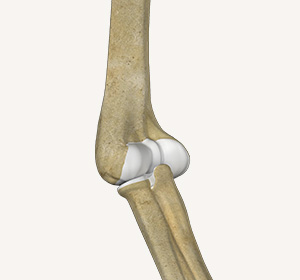
The elbow is a complex joint of the upper limb formed by the articulation of the long bone of the upper arm or humerus and the two bones of the forearm, namely, radius and ulna. It is one of the important joints of the upper limb and is involved in basic movements such as flexion and extension of the upper limb and rotation of the forearm.
The elbow joint is supported by the ulnar collateral ligament, radial collateral ligament, and the annular ligament. These ligaments provide stability and strength to the elbow joint.
The elbow joint also has the attachment of the common flexor and common extensor tendons. The groups of muscles, associated with the respective tendons, assist in rotational movement of the forearm as well as the movements of the wrist and hand.
What are Elbow Injuries?
The common conditions affecting the tendons around the elbow joint include tennis elbow and golfer’s elbow, which result from an overuse injury to the tendons or result from repetitive activities such as sports, mechanical activities or weight lifting.
The ligaments around the elbow may be injured secondary to a sprain, rupture, trauma or an accident. The sprain or trauma may result from repetitive stress, overuse or a direct injury.
What are the Symptoms of Elbow Injuries?
The common symptoms of injury to the elbow joint and its surrounding structures include swelling and pain, which may extend from the elbow to the forearm and palm and be aggravated by movements of the wrist. Sometimes, instability of the joint may also be seen.
What is the Procedure for Elbow Ligament Reconstruction?
Ligament reconstruction is considered in patients with ligament rupture. Your surgeon will make an incision over the elbow. Care is taken to move muscles, tendons, and nerves out of the way. The donor's tendon is harvested from either the forearm or below the knee. Your surgeon drills holes into the bones of the upper arm and forearm, around the elbow joint. The donor's tendon is inserted through the drilled holes in a pattern like that of the original ligament complex. The tendon is then attached to the bone surfaces with special sutures. The incision is closed with sutures and covered with a sterile dressing. A splint is applied to support the elbow for a few weeks. After the surgery, you may be advised for regular follow-up and a rehabilitation program for a quicker recovery.
What are the Risks and Complications of Elbow Ligament Reconstruction?
As with all surgeries, elbow ligament reconstruction surgery may be associated with certain risks and complications. The common complications of the elbow ligament and tendon repair surgeries may include infection, injury to the adjacent nerve and blood vessels, and a loss of strength or flexibility of the elbow joint.
What Does Rehabilitation after Elbow Ligament Reconstruction Involve?
The success of the surgery depends on the postoperative rehabilitation program, which includes the use of a removable splint immediately after surgery as well as ice therapy, electrical stimulation and massage for reducing pain, swelling or muscle spasm. Isometric exercises, strengthening, and range of motion exercises may be useful for long-term rehabilitation.
For more information about our services or to schedule an appointment, call us at or click here to request an appointment online. We'll respond to you as soon as possible.
-
Send a Referral
-
Send Medical Records
-
Additional InquiresEmail us at [email protected]