

Golfer's Elbow Surgery
Colorado Springs Orthopaedic Group
Your elbow connects the upper and lower arm and plays an important role in lifting, reaching, gripping, and other everyday movements. Elbow injuries and conditions can result from sports, repetitive use, trauma, arthritis, or problems affecting the tendons, nerves, and surrounding tissues.
At CSOG, our specialists provide comprehensive care for a wide range of elbow conditions, including tendon injuries, nerve compression, instability, arthritis, fractures, and sports-related injuries. Treatment is based on your diagnosis and may range from conservative care and physical therapy to injections, minimally invasive procedures, and surgery.
Our goal is to identify the source of your elbow problem and provide an individualized treatment approach that helps relieve pain, restore movement and strength, and return you to your normal activities.
What is Golfer’s Elbow?
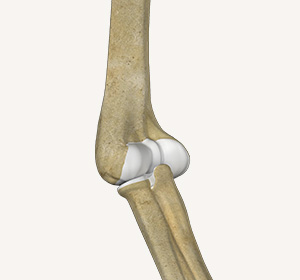
Golfer’s elbow is a condition associated with pain on the inside of the elbow where tendons of your forearm attach to the bony prominence (medial epicondyle). It is also called medial epicondylitis and is caused by injury or irritation to the tendons which can become painful and swollen.
Besides golf, activities such as baseball or lifting a heavy bag or suitcase may also cause medial epicondylitis, hence the terms “baseball elbow” and “suitcase elbow” are also used.
What Causes Golfer’s Elbow?
Golfer’s elbow is an injury that can occur due to sports such as golf, tennis, basketball, archery etc. which can involve overuse of the arm and wrist.
Other causes include:
- Improper technique while weight lifting or throwing.
- Certain occupations such as carpentry, plumbing etc.
Smoking and obesity may increase the risk of injury.
What are the Symptoms of Golfer’s Elbow?
The symptoms of golfer’s elbow include:
- Pain on the inside of the elbow
- The stiffness of the elbow
- The weakness of the affected hand
- Numbness or tingling sensation in the fingers
- Difficulty moving the hand
How is Golfer’s Elbow Diagnosed?
Your doctor will review your medical history and daily activities. A physical examination is performed where elbow movement and pain are assessed. An X-ray or Magnetic Resonance Imaging (MRI) scan may be ordered to visualize the elbow joint.
What are the Treatment Options for Golfer’s Elbow?
Non-surgical Methods
Golfer’s elbow can often be treated by conservative methods such as:
- Resting
- Application of moist heat to the region of pain
- Use of elbow wraps
- Mild massage to the painful area
- Stretching exercises
Surgery for Golfer’s Elbow
Surgical intervention is necessary if you do not respond to conservative methods after about 6 months. Open surgery is usually performed to treat golfer’s elbow although an arthroscopic technique may also be used.
Surgery involves the following steps:
- Local or general anesthesia is administered.
- An incision is made over the medial epicondyle.
- Your surgeon detaches the common origin for tendons attached to the medial epicondyle.
- Damaged and degenerated tendon tissue is removed without injuring the surrounding ligaments.
- Microfracture of the medial epicondyle is performed where numerous small holes are drilled into the bone to promote healing.
- The common origin for the tendons is then reattached to the bone and the incision closed.
What are the Postoperative Measures for Golfer’s Elbow?
- Your arm is supported by a splint.
- Your surgeon suggests light exercises such as sponge squeezing for the first few weeks.
- You may begin resistance exercises after 6-8 weeks.
- You may begin participating in sports after 6-8 months.
What are the Risks and Complications Associated with Surgery for Golfer’s Elbow?
Surgery for golfer’s elbow may be associated with certain risks which include:
- Elbow ligament injuries
- Nerve injuries
- Hematoma
For more information about our services or to schedule an appointment, call us at or click here to request an appointment online. We'll respond to you as soon as possible.
-
Send a Referral
-
Send Medical Records
-
Additional InquiresEmail us at [email protected]