

Lateral Ulnar Collateral Ligament Injuries (Elbow)
Colorado Springs Orthopaedic Group
Your elbow connects the upper and lower arm and plays an important role in lifting, reaching, gripping, and other everyday movements. Elbow injuries and conditions can result from sports, repetitive use, trauma, arthritis, or problems affecting the tendons, nerves, and surrounding tissues.
At CSOG, our specialists provide comprehensive care for a wide range of elbow conditions, including tendon injuries, nerve compression, instability, arthritis, fractures, and sports-related injuries. Treatment is based on your diagnosis and may range from conservative care and physical therapy to injections, minimally invasive procedures, and surgery.
Our goal is to identify the source of your elbow problem and provide an individualized treatment approach that helps relieve pain, restore movement and strength, and return you to your normal activities.
What is the Lateral Ulnar Collateral Ligament (LUCL)?
A ligament is a band of elastic, tough fibrous connective tissue around a joint. It attaches bone to bone, supports and holds them together and limits the joint's movement.
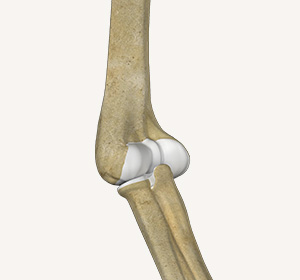
Your elbow is made of four ligaments. The ligament on the outside of the elbow is a lateral ulnar collateral ligament (LUCL). It is the main one of the four ligaments that make up the lateral collateral complex of the elbow.
A LUCL injury is a condition where the ligament is extremely stretched, or torn and detached from the elbow joint.
What Causes LUCL Injuries?
LUCL injuries are mostly caused by looseness of the ligament due to traumatic dislocation in the elbow joint. Insufficiency of the lateral elbow collateral ligament complex can also lead to LUCL injury.
What are the Symptoms of LUCL Injuries?
Pain in the elbow is the primary symptom of LUCL injuries. Other symptoms can be:
- A sensation of the elbow sliding out of place
- A feeling of clicking with elbow extension
- Clunking or catching when pushing off from a chair arm
How are LUCL Injuries Diagnosed?
LUCL injuries are typically diagnosed using various methods such as:
- Physical exam with palpation (check for tenderness over LUCL)
- Motion and stability in the elbow (varus instability)
- Provocative test and apprehension test
- Chair rise test, floor push-up test, table-top relocation test
- Radiograph (X-ray) test or MRI test
What are the Nonoperative Options for LUCL Injuries?
Physical therapy to strengthen the muscles around the elbow can be the first nonoperative option. Additionally, your doctor may also consider other options such as:
- Immobilization at 90° flexion for 5 to 7 days
- Bracing, extensor strengthening
- Activity modifications
What are the Operative Options for LUCL Injuries?
The operative options include:
- LUCL repair and fixation by surgery
- LUCL reconstruction (allograft or autograft)
- Palmaris longus tendon graft
- Docking technique
However, these procedures may sometimes lead to complications such as recurrent instability (3-8% occurrence), infection, cutaneous nerve injury, and decreased ROM.
What Happens After Your Surgery?
After the surgery, your elbow will be put into a splint for 7-10 days.
What Does Rehabilitation Involve?
Once the splint is removed, your rehabilitation process begins with a controlled motion of the elbow. A removable thermoplastic splint is likely to be applied for 3 more weeks to facilitate the overhead range of motion (ROM) exercises in the supine position.
Thereafter, the focus will be shifted toward strengthening the elbow flexors, extensors, pronators, and supinators. The rehabilitation process may continue until you resume full activity, which will usually take 4 to 6 months after your surgery.
For more information about our services or to schedule an appointment, call us at or click here to request an appointment online. We'll respond to you as soon as possible.
-
Send a Referral
-
Send Medical Records
-
Additional InquiresEmail us at [email protected]