

Elbow (Olecranon) Fractures
Colorado Springs Orthopaedic Group
Your elbow connects the upper and lower arm and plays an important role in lifting, reaching, gripping, and other everyday movements. Elbow injuries and conditions can result from sports, repetitive use, trauma, arthritis, or problems affecting the tendons, nerves, and surrounding tissues.
At CSOG, our specialists provide comprehensive care for a wide range of elbow conditions, including tendon injuries, nerve compression, instability, arthritis, fractures, and sports-related injuries. Treatment is based on your diagnosis and may range from conservative care and physical therapy to injections, minimally invasive procedures, and surgery.
Our goal is to identify the source of your elbow problem and provide an individualized treatment approach that helps relieve pain, restore movement and strength, and return you to your normal activities.
What are Olecranon Fractures?
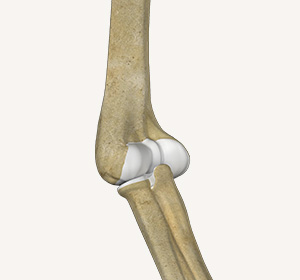
Olecranon fractures are described as a break in the bony tip of the elbow that sticks out when you bend your arm. A fracture of the olecranon bone can be very painful and make motion of the elbow difficult or impossible. This kind of fracture is common and normally happens in isolation (with no other injuries involved).
What is Anatomy of the Elbow Joint
The elbow joint is made up of 3 bones; the humerus (upper arm bone), the radius (forearm bone on the thumb side), and the ulna (forearm bone on the pinky side). These 3 bones are held together by muscles, ligaments, and tendons. The olecranon is the end part of the ulna that “cups” the lower end of the upper arm bone, creating a hinge for movement of the elbow.
What Causes Olecranon Fractures?
Olecranon fractures may be caused by:
- A direct hit or blow to the elbow joint
- Falling on an outstretched arm
- High-impact collision, such as a motor vehicle accident
- Contact sports, such as football
- Fall from a height
What are the Signs and Symptoms of Olecranon Fractures?
Signs and symptoms of olecranon fractures may include:
- Instability feeling in the joint
- Numbness in one or more fingers
- Pain with movement of the elbow
- Tenderness to touch
- Swelling over the elbow
- Bruising around the elbow
How are Olecranon Fractures Diagnosed?
Your doctor will review your medical history and discuss your symptoms. Your doctor will then perform a physical examination of your elbow to determine the extent of the injury by:
- Checking your skin for lacerations and cuts
- Checking your pulse at the wrist to ensure proper blood flow to the fingers and hands
- Palpating your elbow to determine areas of tenderness as this could specify broken bones or other injuries
- Checking how well you can move your wrist and fingers
Your doctor may also order X-rays for a detailed examination of your elbow to diagnose the type and condition of the fracture as well as to determine if you have sustained any other injuries.
What is the Treatment for Olecranon Fractures?
The management of an olecranon fracture is comprised of both non-surgical and surgical approaches. The choice of treatment depends on the type and severity of the fracture.
Non-surgical Treatment
Nonsurgical approach typically involves application of a splint (like a cast) to your elbow and placing your arm in a sling to immobilize the bones and allow healing. Splints are normally worn for 6 weeks before initiating gentle motion. Treatment also involves application of ice to the affected area to reduce swelling and pain along with medications to relieve pain.
Surgical Treatment
Severely displaced, open, or complex fractures may require open reduction and internal fixation (ORIF).
Open reduction and internal fixation (ORIF) is a surgical technique employed for the treatment of a fracture to stabilize and heal a broken bone not amenable to non-surgical conservative treatment.
ORIF Procedure
The surgery is performed under sterile conditions in the operating room under general or local anesthesia.
- After sterilizing the affected area, your surgeon will make an incision around the elbow muscles.
- Your surgeon will locate the fracture by carefully sliding in between the muscles of the elbow.
- The cuts from the injury and surfaces of the fractured bone are thoroughly cleaned out.
- After carefully visualizing the fracture, the bone fragments are first repositioned (reduced) back to their normal alignment.
- The fragments of bone are then held in place with wires, screws, pins, or metal plates attached to the outside of the bone.
- After securing the bone, the incisions are closed by suturing or staples and covered with sterile dressings.
What Does Postoperative Care for Olecranon Fracture Surgery Involve?
You may have some pain post procedure and pain medication will be prescribed to relieve pain. You will need to keep your arm immobile for several weeks by use of a sling to allow healing. Your doctor will give instructions on dressings and incision care along with caring for your arm by applying ice to relieve pain and discomfort.
Physical therapy is suggested to prevent elbow stiffness, strengthen muscles, and restore range of motion. You will also be advised on diet and supplements high in vitamin D and calcium to promote bone healing.
Depending on your health condition and the extent of the injury, you may be able to go home the same day with scheduled follow-up appointments for monitoring progress and for stitches or staple removal if necessary.
What are the Risks and Complications for Olecranon Fracture Surgery?
As with any surgery, some of the potential risks and complications of open reduction and internal fixation of olecranon fractures may include:
- Bleeding
- Infection
- Pain
- Anesthetic complications
- Blood clots or deep venous thrombosis
- Damage to nerves and blood vessels
- Hardware irritation
- Fracture nonhealing
- Broken screws or plates
For more information about our services or to schedule an appointment, call us at or click here to request an appointment online. We'll respond to you as soon as possible.
-
Send a Referral
-
Send Medical Records
-
Additional InquiresEmail us at [email protected]