

Partial Elbow Replacement
Colorado Springs Orthopaedic Group
Your elbow connects the upper and lower arm and plays an important role in lifting, reaching, gripping, and other everyday movements. Elbow injuries and conditions can result from sports, repetitive use, trauma, arthritis, or problems affecting the tendons, nerves, and surrounding tissues.
At CSOG, our specialists provide comprehensive care for a wide range of elbow conditions, including tendon injuries, nerve compression, instability, arthritis, fractures, and sports-related injuries. Treatment is based on your diagnosis and may range from conservative care and physical therapy to injections, minimally invasive procedures, and surgery.
Our goal is to identify the source of your elbow problem and provide an individualized treatment approach that helps relieve pain, restore movement and strength, and return you to your normal activities.
What is Partial Elbow Replacement?
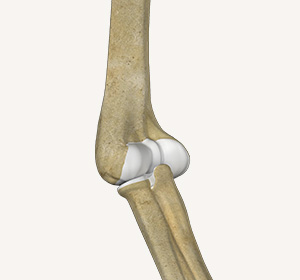
Partial elbow replacement is a surgical procedure performed to replace only the damaged or diseased portions of your elbow joint, typically due to trauma, arthritis, or other degenerative conditions. This procedure aims to alleviate pain, restore joint function, and improve your quality of life while preserving healthy bone and soft tissue.
What is Anatomy of the Elbow Joint?
The elbow is a complex hinge joint formed by three bones:
- Humerus (upper arm bone)
- Ulna (forearm bone on the pinky side)
- Radius (forearm bone on the thumb side)
These bones interact through two articulations: the ulnohumeral joint and the radiocapitellar joint, which allow flexion, extension, pronation, and supination. Partial elbow replacement targets either the ulnohumeral or radiocapitellar joint, depending on the specific pathology.
What are the Indications for Partial Elbow Replacement?
Partial elbow replacement is considered when conservative treatments such as medication, physical therapy, or minimally invasive interventions fail. Indications include:
- Trauma: Complex fractures of the distal humerus or proximal ulna that are irreparable.
- Arthritis: Localized osteoarthritis or rheumatoid arthritis affecting only part of the joint.
- Avascular Necrosis: Loss of blood supply to specific areas of the elbow, leading to joint degeneration.
What is the Procedure for Partial Elbow Replacement?
The procedure typically involves the following steps:
- Preoperative Planning: Imaging studies like X-rays, CT scans, or MRI are used to assess the extent of joint damage.
- Anesthesia: General or regional anesthesia is administered.
- Incision and Exposure:I A posterior approach is commonly used to expose the joint.
- Bone Preparation: The damaged portion of the bone is resected with precision.
- Implant Placement: A prosthetic component is secured in place, designed to replicate the anatomy and function of the replaced segment.
- Closure: The soft tissues and skin are sutured, followed by application of a sterile dressing.
What Does Postoperative Care of Partial Elbow Replacement Involve?
Generally, after partial elbow replacement it is advised to follow a structured rehabilitation protocol, which includes:
- Immobilization: The arm may be immobilized initially to protect the joint.
- Physical Therapy: Gradual range-of-motion exercises are introduced to restore function and strength.
- Pain Management: Medications such as NSAIDs or prescribed analgesics are used to control discomfort.
What are the Benefits and Risks of Partial Elbow Replacement?
Benefits
Benefits of partial elbow replacement include:
- Pain relief
- Improved mobility and function
- Preservation of unaffected parts of the joint
Risks
Some of the risks involved in partial elbow replacement include:
- Infection
- Loosening or wear of the prosthesis
- Nerve or blood vessel injury
- Limited range of motion
Prognosis and Outcomes
Most patients experience significant pain relief and improved joint function post-surgery. Long-term outcomes depend on the condition of the remaining joint structures, adherence to rehabilitation protocols, and avoidance of high-impact activities that stress the joint.
For more information about our services or to schedule an appointment, call us at or click here to request an appointment online. We'll respond to you as soon as possible.
-
Send a Referral
-
Send Medical Records
-
Additional InquiresEmail us at [email protected]