Hip Resurfacing
Colorado Springs Orthopaedic Group
Your hips support your body and help you walk, move, exercise, and perform everyday activities. Hip pain can develop from an injury, overuse, arthritis, or other conditions and may gradually limit your mobility and quality of life.
CSOG provides comprehensive care for a wide range of hip conditions, from sports injuries and tendon problems to arthritis, fractures, and degenerative joint conditions. Treatment may include physical therapy, medications, injections, activity modification, minimally invasive procedures, or hip replacement when appropriate.
Our specialists focus on finding the underlying cause of your symptoms and determining the most appropriate treatment for your needs. Whether you require nonsurgical care or advanced surgical treatment, our goal is to relieve pain, improve mobility, and help you return to the activities you enjoy.
What is Hip Resurfacing?
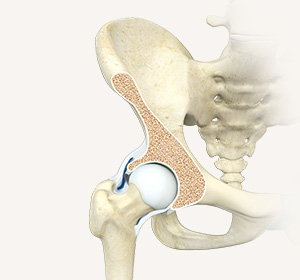
The hip joint is also known as a ball and socket joint, where the ball (femoral head) of the thigh bone fits into the socket (acetabulum) of the pelvic bone.
Damage to the hip bones can be treated by hip resurfacing, which is a surgical procedure in which the damaged parts of the femoral head are trimmed, and the socket is removed and replaced with metal caps.
Hip resurfacing is an alternative to total hip replacement surgery where both the ball and socket of the hip joint are completely removed and replaced with plastic, metal, or ceramic prosthetics.
What are the Indications and Contraindications of Hip Resurfacing?
Your surgeon may recommend hip resurfacing surgery if you suffer from severe hip arthritis affecting your quality of life and the symptoms have not been relieved with conservative treatment options such as medications, injections, and physical therapy.
In addition, younger, larger-framed patients with the strong and healthy bone are more suitable candidates for hip resurfacing surgery.
Hip resurfacing surgery is not recommended in patients with known metal hypersensitivities, osteoporosis, impaired kidney function, and large areas of dead bone (avascular necrosis).
What is the Procedure for Hip Resurfacing?
Hip resurfacing surgery is performed with the patient under spinal or general anesthesia.
Your surgeon makes an incision over your thigh to locate the hip joint. The femoral head is displaced from its socket, trimmed of the damage using special instruments, and fitted with a metal cap. The damaged bone and cartilage lining the socket is removed and a metal cup is fixed. Finally, the femoral head is repositioned into the socket, and the incision is closed.
What are the Advantages of Hip Resurfacing?
The advantages of hip resurfacing over total hip replacement include:
- Easier to revise: Components used in both procedures usually wear out, loosen or fail after a period of 10 to 20 years, requiring revision surgery. As hip resurfacing involves less removal of bone, the revision surgery should be easier to perform.
- Lower risk of hip dislocation: As the ball size in hip resurfacing is larger and closer to the normal size, the risk of hip dislocation is less.
- More natural walking pattern
- Greater range of hip motion
What are the Disadvantages of Hip Resurfacing?
The disadvantages of hip resurfacing are:
- Femoral neck fracture: There is a likelihood of femoral neck fracture with hip resurfacing, which eventually necessitates a total hip replacement.
- Metal ion risk: Tiny metal particles or ions produced by the movement of the metal ball against the metal socket may produce an allergic reaction causing pain and swelling.
- Difficulty: Hip resurfacing is a more difficult procedure to perform, requiring a larger incision.
What are the Risks and Complications of Hip Resurfacing?
As with any surgery, complications are rare but can occur. Hip resurfacing patients may have complications including:
- Formation of blood clots in the leg veins
- Injury to nerves or blood vessels
- Infection
- Femoral neck fracture
- Dislocation
For more information about our services or to schedule an appointment, call us at or click here to request an appointment online. We'll respond to you as soon as possible.
-
Send a Referral
-
Send Medical Records
-
Additional InquiresEmail us at [email protected]