Hip Cartilage Repair
Colorado Springs Orthopaedic Group
Your hips support your body and help you walk, move, exercise, and perform everyday activities. Hip pain can develop from an injury, overuse, arthritis, or other conditions and may gradually limit your mobility and quality of life.
CSOG provides comprehensive care for a wide range of hip conditions, from sports injuries and tendon problems to arthritis, fractures, and degenerative joint conditions. Treatment may include physical therapy, medications, injections, activity modification, minimally invasive procedures, or hip replacement when appropriate.
Our specialists focus on finding the underlying cause of your symptoms and determining the most appropriate treatment for your needs. Whether you require nonsurgical care or advanced surgical treatment, our goal is to relieve pain, improve mobility, and help you return to the activities you enjoy.
What is Hip Cartilage Repair?
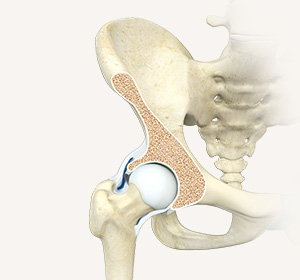
Hip cartilage is a white, tough, flexible tissue covering the ball (femoral head) and socket (acetabulum) of your hip joint. It acts as a cushion or shock-absorber and allows the bones to slide over one another by providing a smooth surface in the joint.
Hip cartilage repair is the process of restoring damaged cartilage in the hip joint, either surgically or non-surgically.
What are the Causes of Hip Cartilage Damage?
There are several ways your hip cartilage can be damaged. Major contributors include:
- Forceful motions during sports or other physical activities
- Sudden injury to the hip joint or dislocation
- Wear and tear of the cartilage over time (chronic)
- Structural abnormality of the acetabulum or femoral head
- Hip labral tear caused by injury or structural problems
- Medical condition such as femoroacetabular impingement (FAI)
What are the Symptoms of Hip Cartilage Damage?
Hip cartilage damage can lead to the following:
- Pain in the hip or groin area at rest and when inflamed
- Pain that worsens during physical activities or when you put weight on the joint
- Reduced range of motion of the hip joint or stiffness in this area
- A sense of clicking, grinding, catching, locking or giving-way in the joint
How is Hip Cartilage Damage Diagnosed?
Diagnosis of hip cartilage damage typically requires:
- A physical examination, usually involving you moving your legs or walking around
- Imaging tests such as an X-ray, MRI scan and/or arthroscopy
What is the Significance of Hip Cartilage Repair?
Once the hip cartilage is damaged, it becomes frayed and rough, and the protective joint space between the bones decreases. This leads to:
- Lack of good blood supply to the cartilage
- Painful bone-on-bone rubbing
Therefore, the cartilage cannot heal on its own and needs to be repaired.
If not restored, it may lead you to develop osteoarthritis, which is the degeneration of cartilage and underlying bone.
What Does Hip Cartilage Repair Involve?
Minor cartilage injuries can sometimes improve on their own within a few days. However, the doctor’s intervention is required in other cases.
If the symptoms are mild, the cartilage can often be restored with adequate rest. Other possible non-surgical options include:
- Medications:
- Nonsteroidal anti-inflammatory drugs (NSAIDs)
- corticosteroid injections into the hip joint
- Physical therapy:
- Exercises to improve the hip’s range of motion and strengthen the muscles around the hip joint
- Modifications in activities:
- Changing habitual movements that put stress on the hip
- “PRICE” formula
- Protection: Protecting the damaged area from further injury by using a support
- Rest: Resting the damaged hip joint during the first 2 or 3 days
- Ice: Applying an ice pack to the injured area on regular a basis for 2 or 3 days
- Compression: Compressing or bandaging the injured area to limit the movement
- Elevation: Keeping the injured area raised and supported to help reduce swelling
Surgical Intervention
Severe cartilage damage may eventually require surgery, which is usually performed arthroscopically under anesthesia.
This is a minimally invasive surgery during which your doctor:
- Makes small incisions (cuts) in the skin covering the hip joint
- Inserts a fiber-optic camera and surgical tools into the hip joint
- Carries out any of the following repairs depending on the need
- Refixation: The torn tissue is sutured back together.
- Debridement: The damaged portion is cleared out.
- Reconstruction: The damaged tissue is replaced with healthy cartilage.
- After the repair, the incisions are closed, and a dressing is applied.
If the damage is very severe, the doctor may order an additional or advanced procedure.
After the surgery, it may take you about 3 months to resume normal activities and several more to return to strenuous activities.
What are the Complications of Surgical Repair?
Hip cartilage repair can lead to complications such as:
- Nerve injury or blood vessel injury
- Infection and persistent pain in the hip
For more information about our services or to schedule an appointment, call us at or click here to request an appointment online. We'll respond to you as soon as possible.
-
Send a Referral
-
Send Medical Records
-
Additional InquiresEmail us at [email protected]