Trauma
Colorado Springs Orthopaedic Group
Sports injuries can happen to competitive athletes, active adults, weekend athletes, and anyone who enjoys staying physically active. Whether caused by an acute injury or repetitive stress, these problems can affect your performance and keep you from doing the activities you enjoy.
CSOG provides comprehensive sports medicine care for a wide range of injuries and conditions affecting the joints, muscles, tendons, and ligaments. Our specialists emphasize accurate diagnosis and individualized treatment, with options that may include rehabilitation, physical therapy, injections, minimally invasive procedures, and surgery when necessary.
Our approach is focused not only on treating the immediate injury but also on helping you safely regain strength, mobility, and confidence. The goal is to help you return to your sport or activity at the appropriate stage of recovery.
What is Trauma?
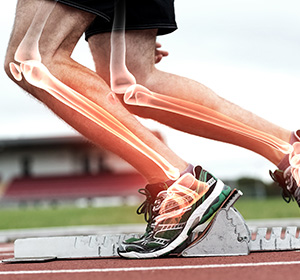
Trauma is defined as a sudden incident causing physical injury. It is a broad term describing all types of injuries affecting the muscles, tendons, ligaments, joints, nerves, blood vessels, or bones that most commonly occur during sports, exercise, or any other physical activity. Trauma may be a result of accidents, poor training practices, insufficient warm-up and stretching exercises, or from use of improper gear. The term is wide-ranging and may include sprains, strains, minor fractures, dislocations, or serious broken bones with a direct threat to the patient’s life.
Causes of Trauma
Some of the common causes of trauma include:
- Motor vehicle collision
- High-impact sport injury
- Slips and falls
- Assaults
- Gunshot wounds
- Industrial accidents
Symptoms of Trauma
Trauma to the soft tissues and bones may accompany several potential symptoms, such as:
- Tenderness
- Swelling
- Bruising
- Bleeding
- Numbness
- Severe pain
- Inability to bear weight
- Inability to lift or turn the injured part
- Pins and needles sensation
- Bone sticking out of the skin
Diagnosis of Trauma
To diagnose the problem, your doctor will review your medical history and details of the accident along with performing a thorough physical examination to check for tenderness, inflammation, pain, range of motion, and weight-bearing ability. Further, imaging tests such as X-rays, CT and MRI scans will be ordered to confirm the diagnosis.
Treatment for Trauma
The treatment for trauma injuries includes both non-surgical and surgical methods. Non-surgical methods are the initial line of management and include:
- Restriction of movement of the injured part through splints, braces, etc.
- Heat or cold treatment that may relieve pain and accelerate the repair process
- Exercise and physical therapy to help in stretching and strengthening the injured muscles
- Medication such as anti-inflammatory drugs and analgesics
In cases where non-surgical methods are not effective, a surgical approach may be required to reduce fractured bones, or repair or reconstruct torn ligaments and tendons. Some of the surgical methods employed include:
- Open reduction and internal fixation: In this approach, an incision is made over the fractured bone to expose the fracture. The fragments of bone are realigned and stabilized with metal wires, screws, pins, and plates. The incision is closed and dressed, and the affected bone is placed in a splint, shoe, boot, or cast to promote healing.
- Percutaneous screw fixation: For some types of fractures, reduction can be achieved with a closed manipulation of the affected bone using X-ray. The bone can either be pushed or pulled to set it into place without making a large incision. This method, called percutaneous fracture fixation, can be performed with one or more small incisions instead of the traditional large incision, through which the implants are fixed.
- Arthroscopy: This is a minimally invasive surgery where a flexible fiberoptic tube with a high-intensity light and camera attached at the end, called an arthroscope, is used to view the affected joint and guide miniature instruments to remove fragments of torn ligament, bone, or cartilage from within the joint.
- Reconstruction: Torn ligaments can be surgically repaired with sutures or replaced with a graft, which can be another ligament and/or tendon retrieved from another part of the body.
- Fusion: In cases of severe injury, damaged bones are fused together so that they heal into one single bone. This limits movement in the joint.
- Joint replacement: This involves the surgical reconstruction and replacement of damaged joints, using artificial body parts, or prosthetics.
For more information about our services or to schedule an appointment, call us at or click here to request an appointment online. We'll respond to you as soon as possible.
-
Send a Referral
-
Send Medical Records
-
Additional InquiresEmail us at [email protected]