Joint Injuries
Colorado Springs Orthopaedic Group
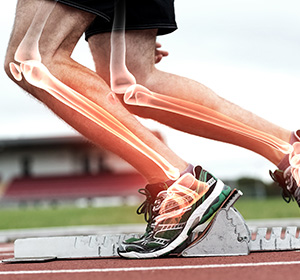
Sports injuries can happen to competitive athletes, active adults, weekend athletes, and anyone who enjoys staying physically active. Whether caused by an acute injury or repetitive stress, these problems can affect your performance and keep you from doing the activities you enjoy.
CSOG provides comprehensive sports medicine care for a wide range of injuries and conditions affecting the joints, muscles, tendons, and ligaments. Our specialists emphasize accurate diagnosis and individualized treatment, with options that may include rehabilitation, physical therapy, injections, minimally invasive procedures, and surgery when necessary.
Our approach is focused not only on treating the immediate injury but also on helping you safely regain strength, mobility, and confidence. The goal is to help you return to your sport or activity at the appropriate stage of recovery.
What are Joint Injuries?
An articulation between any two bones in the body is referred to as a joint. Most joints enable movement and are supported by a capsule, ligaments, muscles, and tendons. Cartilage lines the articulating surfaces of the bones enabling smooth movement and providing cushion. Overuse or unexpected injury to any of these structures during physical activity may result in joint injuries. Knees, ankles, wrists, shoulders, and elbows are the commonly injured joints. These joints can become inflamed and red, immobile, and have a reduced range of motion.
Types of joint injuries include:
- Sprains (overstretching of ligaments)
- Strains (overstretching of muscles)
- Bursitis (inflammation of fluid-filled sacs in the joint)
- Cartilage injury due to trauma or arthritis
- Tendonitis
- Dislocations
- Fractures or breaks
What are the Causes of Joint Injuries?
Some of the common causes of joint injuries include:
- Overuse injuries from repetitive motion
- Excessive force (pulling or pushing)
- Traumatic injuries (accidental or sports-related injuries)
- Wear and tear on the joints (osteoarthritis)
- Rheumatoid arthritis, an autoimmune condition
- Other kinds of arthritis such as gout and ankylosing spondylitis
- Poor or awkward posture
- Osteoporosis (weakness of the bone)
Common joint injuries include:
- ACL tears of the knee
- Rotator cuff injuries of the shoulder
- Tennis elbow
- Ankle sprains
- Wrist sprains
What are the Symptoms of Joint Injuries?
Signs and symptoms of joint injuries include:
- Joint pain
- Inflammation
- Swelling
- Redness
- Stiffness and reduced range of motion
- Weakness
- Instability
Diagnosis of Joint Injuries
Your doctor will review your medical history and symptoms and perform a thorough physical examination to assess the range of motion, noting any pain, bruising, swelling, or redness over the joint. Your doctor may also recommend the following diagnostic test:
- MRI Scan: This study uses a large magnetic field and radio waves to produce images that help in detecting damage to the soft tissues such as the muscles tendons and ligaments.
- CT Scan: This scan uses multiple X-rays to produce detailed cross-sectional images of the joints.
- X-rays: This study uses electromagnetic beams to produce images of the bones and can diagnose fractures.
- Ultrasound: This study uses high-frequency sound waves to produce images of the tissues.
What are the Treatments for Joint Injuries?
To treat a joint injury your doctor will recommend rest, ice, compression, and elevation (RICE protocol) that helps manage pain and swelling. Non-steroidal anti-inflammatory medications may also be prescribed.
Other non-surgical treatments include:
- Physical therapy to help strengthen the adjacent muscles and improve range of motion.
- Braces can provide support and improve coordination in cases of joint instability or excessive joint movement.
When conservative treatment fails to relieve symptoms or the joint remains unstable or dislocated, surgery is recommended to repair or reconstruct structures, provide stability and improve healing.
Preventing Joint Injuries
Factors that can help prevent joint injuries include:
- Exercising to strengthen the muscles and increase flexibility
- Making sure you follow warm-up and cool-down exercises before and after sports activities
- Increasing the intensity of physical activity gradually
- Stretching after physical activity
- Maintaining a healthy diet to nourish the muscles and other joint structures
- Ensuring you wear properly-fitted protective gear such as elbow guards, eye gear, facemasks, mouthguards, pads, comfortable clothes, and athletic shoes for sports activity.
For more information about our services or to schedule an appointment, call us at or click here to request an appointment online. We'll respond to you as soon as possible.
-
Send a Referral
-
Send Medical Records
-
Additional InquiresEmail us at [email protected]