

Bone Density Testing
Body Mass Composition Testing with DEXA in Colorado Springs, CO
Understanding your body composition is one of the most effective ways to evaluate your overall health, fitness, and wellness beyond what a traditional scale can provide. At Colorado Springs Orthopaedic Group, we offer advanced DEXA body composition scans to accurately measure body fat percentage, lean muscle mass, bone density, and fat distribution.
Unlike body weight or BMI alone, DEXA body composition analysis provides a comprehensive picture of your health by identifying where fat and lean tissue are distributed throughout the body. Whether you are an athlete looking to optimize performance, an individual pursuing weight loss goals, or someone seeking a better understanding of your overall health, DEXA scanning offers precise, reliable data to help guide your decisions.
Serving patients throughout Colorado Springs and surrounding communities, our team provides detailed body composition assessments that can help monitor fitness progress, evaluate health risks, and support personalized wellness plans.
-
Send a Referral
-
Send Medical Records
-
Additional InquiresEmail us at [email protected]
Colorado Springs Orthopaedic Group
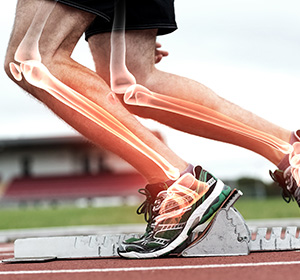
Sports injuries can happen to competitive athletes, active adults, weekend athletes, and anyone who enjoys staying physically active. Whether caused by an acute injury or repetitive stress, these problems can affect your performance and keep you from doing the activities you enjoy.
CSOG provides comprehensive sports medicine care for a wide range of injuries and conditions affecting the joints, muscles, tendons, and ligaments. Our specialists emphasize accurate diagnosis and individualized treatment, with options that may include rehabilitation, physical therapy, injections, minimally invasive procedures, and surgery when necessary.
Our approach is focused not only on treating the immediate injury but also on helping you safely regain strength, mobility, and confidence. The goal is to help you return to your sport or activity at the appropriate stage of recovery.
What is a Bone Scan?
A bone scan is a diagnostic imaging technique commonly used to detect and evaluate various bone disorders and abnormalities. This non-invasive procedure provides information about bone structure, function, and metabolism.
Indications for a Bone Scan
A bone Scan may be indicated in the assessment of the following conditions:
- Fractures and Trauma: Bone scans are effective in detecting stress fractures, and other traumatic injuries that may not be visible on conventional X-rays.
- Bone Infections: In cases of suspected bone infections (osteomyelitis), a bone scan can help identify areas of increased blood flow or bone turnover indicative of an inflammatory response.
- Tumors and Metastases: Bone scans are crucial for assessing bone involvement in cancer, detecting primary bone tumors, and identifying metastases from other cancer sites.
- Arthritis: In certain types of arthritis, such as rheumatoid arthritis, a bone scan may reveal areas of increased activity and inflammation within the joints.
- Paget's Disease: This rare bone disorder involves abnormal bone remodeling. A bone scan can help assess the extent of bone involvement in Paget's disease.
- Bone Pain of Unknown Origin: When you experience unexplained bone pain, a bone scan can assist in identifying the source of the pain and guide further diagnostic investigations.
Preparation for a Bone Scan
You usually can eat and drink as normal before the scan. Tell your doctor if you have used any drug with bismuth, like Pepto-Bismol, or if you've had an X-ray with barium contrast in the last 4 days. Barium and bismuth can affect the outcome of the bone scan.
Procedure for a Bone Scan
A bone scan procedure involves the following steps:
- You will be injected with a small amount of a radioactive substance called a radiotracer, typically technetium-99m (Tc-99m) diphosphonate. This radiotracer has an affinity for bone tissue and accumulates in areas with increased bone turnover.
- After the injection, you will have to wait for a period of 2-4 hours. This is known as the uptake phase, during which the radiotracer is absorbed by the bones.
- You will lie down and be positioned on a scanning table, and a gamma camera is used to capture images of the distribution of the radiotracer in the bones. Multiple views may be taken to obtain a comprehensive evaluation.
- In some cases, delayed imaging is performed several hours or days after the initial injection to capture any delayed uptake patterns.
- Nuclear medicine specialists interpret the images, looking for areas of increased or decreased radiotracer uptake, which may indicate abnormalities in bone metabolism.
After Your Bone Scan Procedure
You should not have any problems or side effects from the bone scan, and you can go back to your normal activities. You may need to drink plenty of fluids for a couple of days to help flush the tracer from your body. The tracer should be eliminated within 48 hours after the scan.
Interpretation of a Bone Scan
Results of a bone scan can be interpreted as follows:
- Normal Bone Scan: A uniform distribution of the radiotracer throughout the skeleton is considered normal.
- Abnormal Findings: Increased uptake may suggest conditions such as fractures, infections, tumors, or inflammatory joint diseases. Conversely, decreased uptake may indicate conditions like avascular necrosis or decreased bone metabolism.
For more information about our services or to schedule an appointment, call us at or click here to request an appointment online. We'll respond to you as soon as possible.







Why Choose Colorado Springs Orthopaedic Group for Body Mass Composition Using DEXA?
At Colorado Springs Orthopaedic Group, we utilize state-of-the-art DEXA technology to provide highly accurate body composition analysis in a comfortable clinical setting. Our experienced team helps patients understand their results and develop informed strategies to achieve their health and fitness goals.
Benefits of choosing our practice include:
- Advanced DEXA scanning technology for precise body composition measurements
- Detailed analysis of body fat, lean muscle mass, and bone density
- Fast, non-invasive testing with minimal radiation exposure
- Personalized interpretation of results and wellness recommendations
- Monitoring tools for weight loss, fitness, and athletic performance goals
- Support for long-term health management and disease prevention
- Convenient access to expert care in Colorado Springs
Whether your goal is improving athletic performance, tracking body composition changes, managing weight, or enhancing overall health, our team is committed to providing accurate information and actionable insights
Body Mass Composition Using DEXA FAQs
Schedule Your DEXA Body Composition Scan in Colorado Springs
Take the guesswork out of your health and fitness journey. Contact Colorado Springs Orthopaedic Group today to schedule a Body Mass Composition DEXA Scan and gain detailed insights into your body composition, muscle mass, body fat percentage, and bone health.
Discover a more accurate picture of your health with advanced DEXA body composition testing in Colorado Springs, CO.