Multiligament Instability
Colorado Springs Orthopaedic Group
Your knees absorb significant stress with every step, making them particularly vulnerable to injury, overuse, and wear over time. Knee pain can interfere with walking, exercise, work, sports, and many of the activities you enjoy.
CSOG provides comprehensive evaluation and treatment for knee conditions affecting patients of all ages and activity levels. Our specialists treat sports injuries, ligament and meniscus problems, arthritis, fractures, and other conditions using both nonsurgical and surgical approaches.
Depending on your diagnosis, treatment may include physical therapy, medications, injections, bracing, minimally invasive procedures, or surgery. We take your symptoms, activity level, and goals into account when developing your treatment plan, with a focus on reducing pain and helping you regain strength, stability, and function.
What is Multiligament Instability?
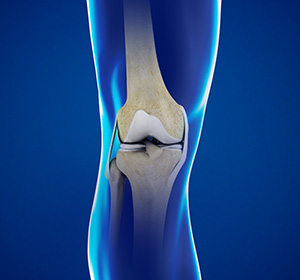
The knee is a complex joint of the body that is vital for movement. The four major ligaments of the knee are anterior cruciate ligament (ACL), posterior cruciate ligament (PCL), medial collateral ligament (MCL) and lateral collateral ligament (LCL). They play an important role in maintaining the stability of the knee. A multiligament injury is a tear in one or more ligaments of the knee, which affects the knee stability.
What are the Causes of Multiligament Instability?
Multiligament instability occurs because of a direct blow to the knee, fall from a height or motor vehicle trauma. Multiple ligament knee injuries are common in athletes involved in contact sports such as soccer, football, and basketball.
What are the Symptoms of Multiligament Instability?
The symptoms of multiligament knee injuries may include pain, swelling, limited range of motion, injuries to nerves and arteries of the leg, and knee instability.
How is Multiligament Instability Evaluated?
Sometimes, knee pain due to other injuries results in involuntary movements that give the sensation of instability. A thorough examination by an experienced doctor is very crucial for the correct diagnosis of multiligament instability.
What is the Treatment for Multiligament Instability?
Usually, grade I (mild tear) and grade II (partial tear) multiligament injuries are treated conservatively with rest, ice, compression, and elevation. The treatment of grade III (complete tear) multiligament injuries requires surgery. Moreover, unlike grade III single ligament injury, the surgery is usually performed soon after the injury and often involves more than one surgery.
Surgical reconstruction is usually performed arthroscopically. The surgery involves reconstruction of the torn ligament using a tissue graft taken from another part of the body, or from a donor. The damaged ligament is replaced by the graft and fixed to the femur and tibia using metallic screws. Gradually, over a period of a few months, the graft heals.
After the multiligament knee reconstruction surgery, crutches may be required for 6 to 8 weeks. Most patients can also return to their high-level sport after a period of rehabilitation.
For more information about our services or to schedule an appointment, call us at or click here to request an appointment online. We'll respond to you as soon as possible.
-
Send a Referral
-
Send Medical Records
-
Additional InquiresEmail us at [email protected]